

Ready to move a vehicle across the border without stress? If you’ve asked “how can i send a car to mexico” you’re in the right place. This guide cuts through jargon and shows reliable options like RORO, container, LOLO, and flat rack so you can pick the best fit.
Even for international routes, the fundamentals start the same. Here’s how to ship a car in 3 simple steps before you layer in extra requirements.
Start with the basics →You’ll learn the full process from choosing a shipping method and prepping the vehicle to handing paperwork at U.S. ports and clearing customs in Mexico. We explain timelines, typical costs (roughly $1,200–$1,700, up to $3,000+ for special cases), and which ports often save money.
Important: Some steps need a few days of planning for documents and banking. Ready to move forward? Follow the next steps for a clear, safe path.
Want to send a car to Mexico?
Before crossing the border, it’s helpful to understand the basic auto transport process in how to transport a vehicle to another state , then add the customs and documentation steps specific to Mexico.
For more international and pre-port examples, explore:
Summary
Table of Contents
Quick Answer: The Simple Path to Shipping a Car from the U.S. to Mexico
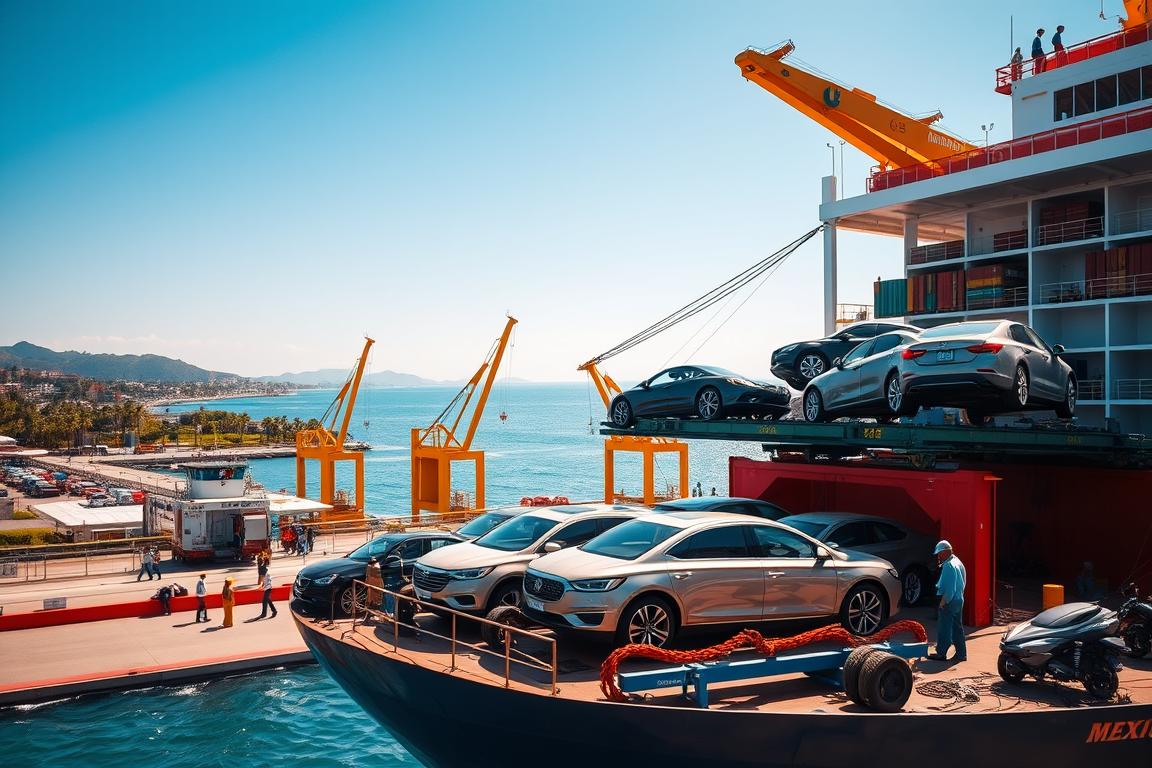
Shipping a vehicle from the U.S. into Mexico is often simpler than it looks when you follow a clear path. Choose a method (RORO or container), book a trusted carrier and licensed customs broker, and prepare your vehicle for transport.
Most people pick efficient RORO for a running car or a secure container for higher-value vehicles or personal items. Expect typical shipping costs near $1,200–$1,700, and up to $3,000+ for special cases.
- Deliver to the U.S. port or use door-to-port to cut inland costs.
- Allow a short ground leg plus ocean transit and add about 10 extra days for documents and processing.
- Have title, ID, and a clean, empty vehicle ready to speed pickup.
“Request a detailed quote early from reputable car shipping providers that handle shipping mexico daily.”
Follow these steps and you’ll keep the plan on schedule, on budget, and stress-free.
How can i send a car to mexico — The Seven Essential Steps
Start by mapping your timeline, budget, and final destination. Knowing these details helps you choose the right shipping option and avoids last-minute fees or delivery delays.
- Define your plan: Lock in the Mexico destination, a target arrival window, and a budget.
- Pick a method: RORO is most economical for running vehicles. Use container for enclosed safety or to include personal items. Choose LOLO or flat rack for oversized or inoperable loads.
- Select pros: Book a vetted carrier and a licensed customs broker for smooth export and import handling.
- Gather paperwork: Prepare title, registration, passport/ID and required documentation before handoff.
- Prep and deliver: Clean and empty the car, secure loose parts, follow fuel rules, and deliver to the chosen U.S. port or arrange domestic transport.
- Clear and track: Your broker manages clearance, duties, and fees while you monitor the vessel and stay ready for time-sensitive approvals.
- Receive and register: Pick up the vehicle, complete local registration and insurance, and confirm final paperwork.
Plan extra buffer days for approvals and bank processes so your ship car timeline stays on track.
Costs, Timelines, and What Affects Your Final Price

Start with realistic ranges. Typical shipping totals for a standard vehicle fall between about $1,200 and $1,700. Premium routes or enclosed options can push totals over $3,000.
Sample lanes illustrate combined ground + ocean time and costs. New York → Altamira often shows ground ~$275 plus ocean ~$1,600 with ~5 + 12 days. Los Angeles → Ensenada commonly runs ground ~$350 plus ocean ~$2,500 with ~5 + 5 days. Phoenix → Manzanillo may be ~ $550 ground and ~$2,500 ocean with ~6 + 6 days.
Key cost drivers: method (RORO vs container), vehicle size and weight, origin/destination distance, season, and port fees. Add-on services like insurance or terminal handling raise the bill.
- Save inland costs: Delivering your vehicle to the nearest U.S. port usually lowers domestic trucking charges.
- Plan for paperwork: Allow about 10 extra days for documentation and bank processing so your schedule stays realistic.
- Get precise quotes: Request door-to-port and door-to-door estimates using your VIN and trip details.
“Request detailed pricing early so you know which route and services match your budget.”
Shipping Methods Compared: RORO vs. Container vs. LOLO vs. Flat Rack
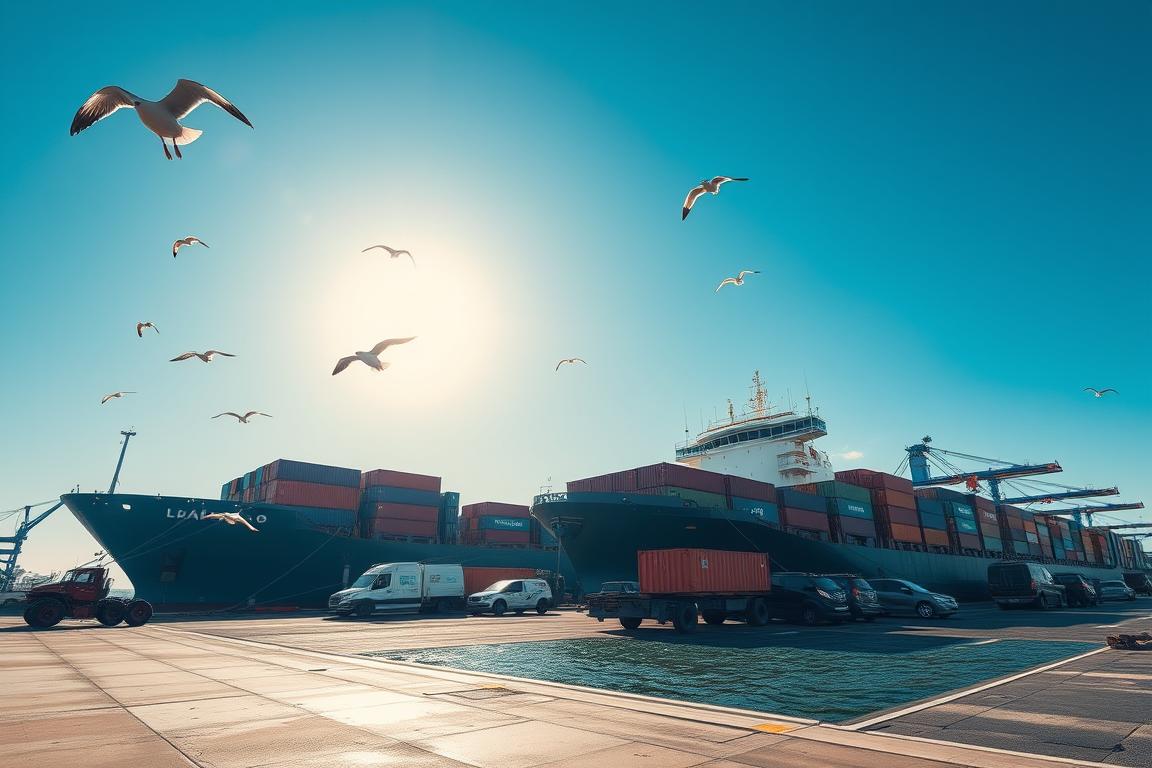
Choosing the right vessel type makes a big difference in cost, speed, and protection for your vehicle. Below we compare common options so you can pick the best fit for value and peace of mind.
RORO (roll-on roll-off)
Best for running cars and light-duty vehicles. With roll-on roll-off loading, drivers or winches roll vehicles onto decks. This reduces handling and speeds terminal processing.
Container
Enclosed security for valuables and personal items. Container shipping shields against weather and tampering. It costs more but suits luxury models or when you add household items.
LOLO and flat rack
For oversized or inoperable equipment. LOLO uses cranes to lift units on and off. Flat rack secures out-of-gauge cargo on a steel frame. Both are more complex and often slower than roro shipping.
- Cost vs. protection: RORO usually wins on price and speed; container offers higher protection.
- Route limits: Not every port supports every shipping method, so check availability early.
- Get side-by-side quotes: Compare roro shipping and container shipping to weigh protection versus cost.
“Pick the method that matches value, timing, and how much protection your vehicle needs.”
Documents and Compliance: Export from the U.S., Import to Mexico

Getting documentation right makes export and import steps far less stressful. Gather the core papers early so your vehicle clears without surprise holds.
Documentation matters: photos + Bill of Lading at pickup and delivery. Follow this car shipping step-by-step guide to avoid confusion.
Use the step-by-step →Core paperwork
For U.S. export and Mexico import, have these ready: title, registration, passport/ID, proof of ownership, driver’s license, and the bill of lading from your carrier once booked.
Comparing different ways to get your car into Mexico?
Look at broader international guidance in can I ship my car to another country , island shipping in transporting a car to Puerto Rico , and pre-port routes like Texas to Florida car transport .
Permits and forms
Your broker will help with customs filings and ensure the vehicle meets all regulations. If you plan to drive the vehicle in Mexico, secure a TIP (Temporary Vehicle Import Permit) via Banjercito and carry Mexican auto insurance.
Authoritative references
Use official guidance during preparation: U.S. CBP vehicle export help and Title 19 CFR for legal rules. EPA and DOT forms are available if needed later for emissions and safety checks.
| Document | Purpose | Issuer | When to Obtain |
|---|---|---|---|
| Title | Proof of ownership | State DMV | Before booking |
| Bill of Lading | Carrier confirmation for customs | Shipping carrier | After booking |
| TIP | Temporary import to drive in Mexico | Banjercito | Before border entry |
| Passport/ID | Identity and clearance | Government | Always carry |
- Important: Your customs broker coordinates filings, taxes, and approvals so your auto clears without avoidable holds.
- Note: Mexican banks often close on weekends—build extra time for payments or notarizations tied to the TIP or import steps.
“Preparation and a trusted broker are the best ways to keep your shipping timeline on track.”
Ports and Logistics: From U.S. Gateways to Mexico’s Key Hubs
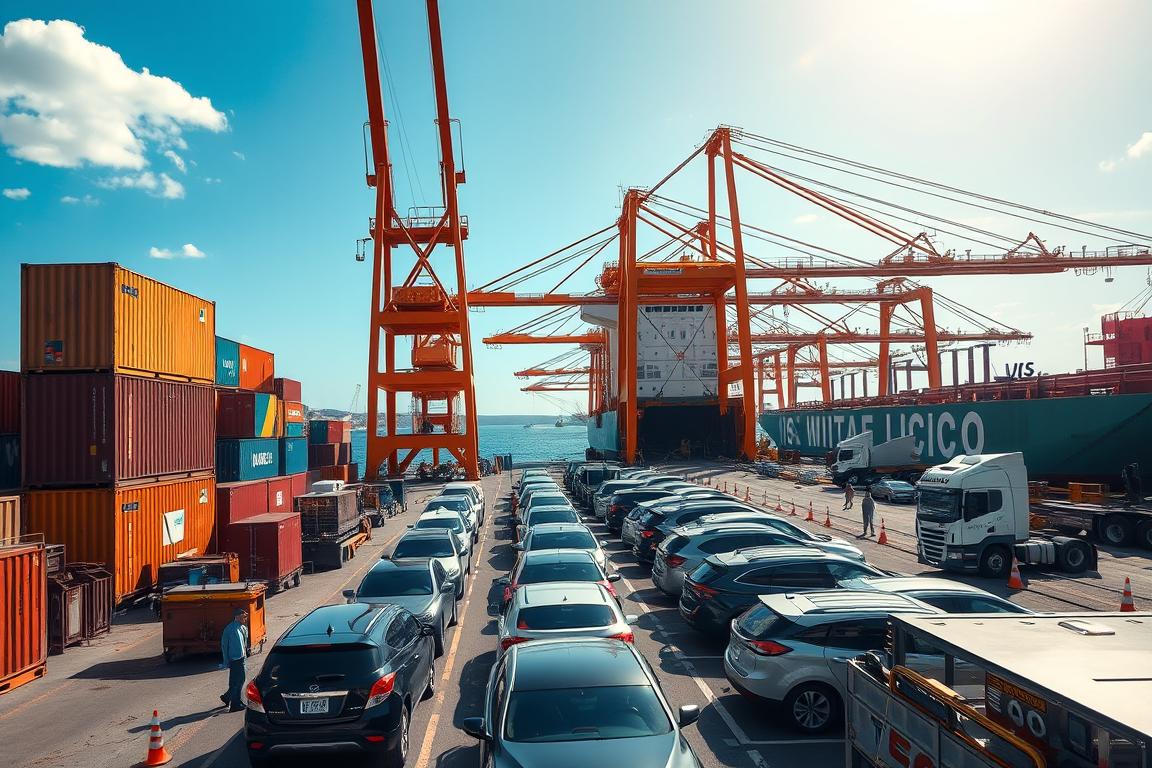
Your origin port choice sets timing, cost, and available vessel types. Picking the right terminal helps you save on inland hauling and match the best shipping method for your vehicle.
Popular U.S. gateways include Baltimore, Brunswick, Charleston, Houston, Jacksonville, Newark/New York, Norfolk, Galveston, Los Angeles, San Diego, Tacoma, and Halifax.
On the Mexico side, common arrivals are Veracruz, Lázaro Cárdenas, Manzanillo, Altamira, Ensenada, and Progreso. Lázaro Cárdenas has a busy RORO terminal that handles roughly 450,000–480,000 vehicles yearly, which helps reliability for roro shipments.
- Save money: Deliver your vehicle to the nearest U.S. port to cut inland trucking costs.
- Match methods: Some routes are container-only while others run roro; check availability early.
- Transit time: Ocean legs typically run about 6–21 days depending on origin and method.
“Driving to the port often reduces fees and shortens total transit time.”
Your carrier and broker will track the vessel ETA, handle cutoffs, and confirm where to pick up your car at the destination port.
Vehicle Prep Checklist and Timing Your Shipment
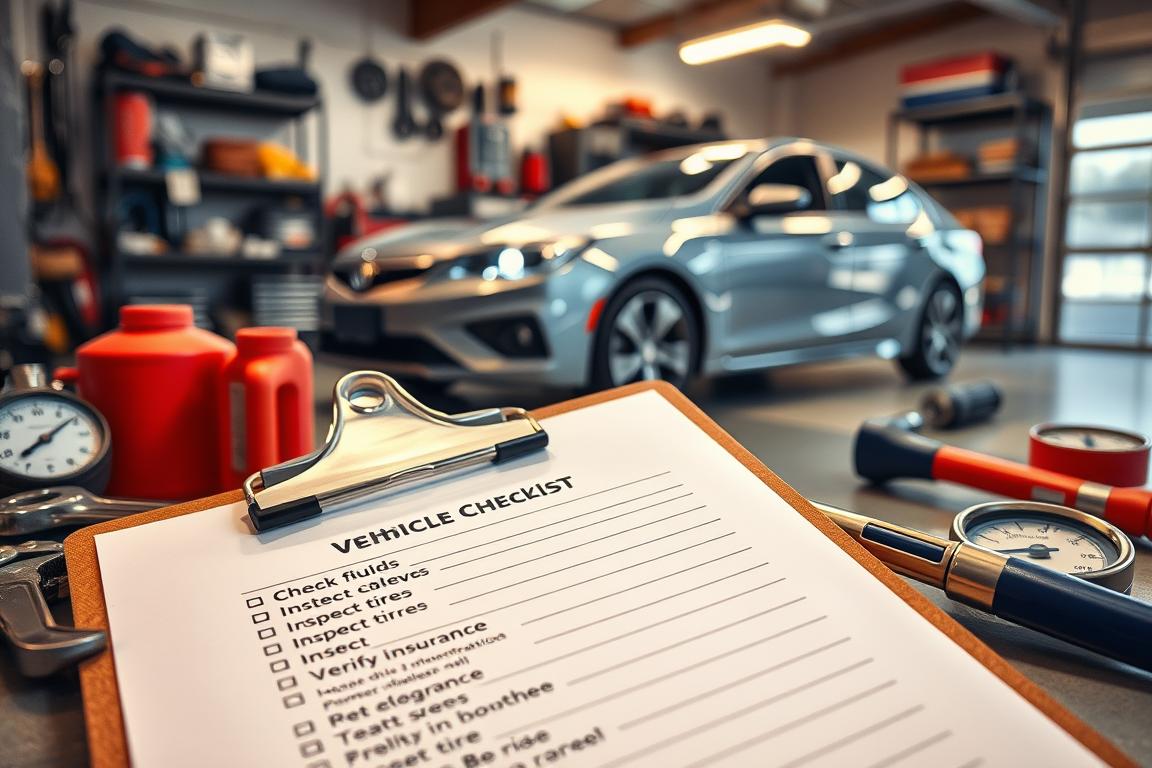
Preparing your vehicle right makes pickup and release faster, and reduces surprise holds. Follow this compact checklist and plan your timing around milder seasons for smoother transit.
Clean inside and out. A tidy vehicle helps avoid quarantine or sanitation delays. Consider a steam-cleaned interior to cut inspection risk.
Empty the cabin and trunk. For roll-on roll-off moves most carriers require no personal items inside the car. This speeds inspections and avoids claims disputes.
- Remove loose add-ons. Detach racks, spoilers and aftermarket electronics so nothing detaches and damages your cargo during shipping.
- Check operability. For RORO make sure the car starts, steers and stops. Top up the battery and note quirks for the handler to ensure safe delivery.
- Confirm fluids and A/C rules. Some lanes limit certain refrigerants. Your broker will advise if draining is required for your vehicle and its size class.
- Document condition. Photograph the vehicle before handover; photos simplify claims and provide peace of mind during transport.
Time your move smartly. Spring and fall usually bring steadier weather, reducing weather-related schedule slips by a few days. Avoid peak heat in May and heavy rains in July where possible to save time and risk.
Important: Follow your carrier’s prep checklist exactly—these small steps protect your shipping timeline and help ensure a smooth release at the destination.
On Arrival in Mexico: Customs, Duties, and Registration
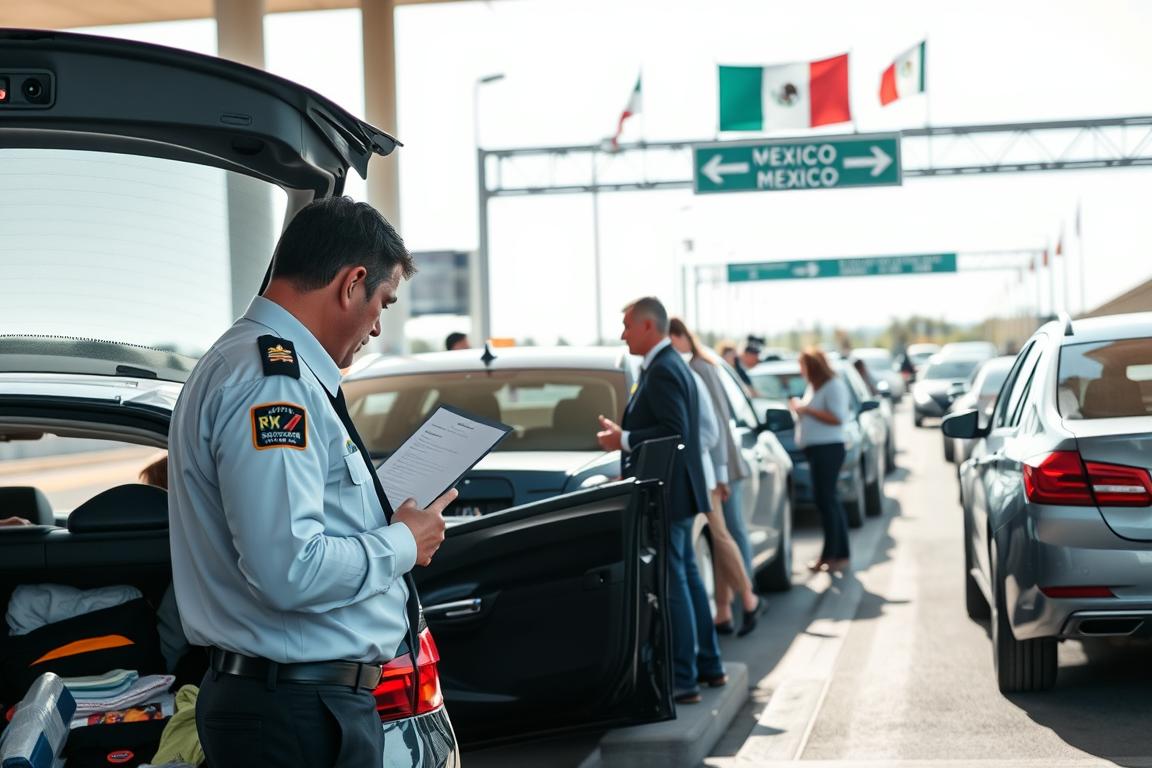
Arrival begins a short, predictable sequence. Expect inspection, payment, and final entry steps before your vehicle is released. We’ll guide you through each action so you know what to expect at the terminal.
Customs inspection, payments, and completing vehicle entry
Clear customs: Your broker submits paperwork, schedules inspection, and confirms import status for your vehicle. They keep you updated at each milestone.
Pay duties and fees: Be ready to settle duties and any port fees tied to your lane and car details. Your broker will share the exact amounts and accepted payment methods.
Final steps to drive legally: insurance and local compliance
Confirm compliance with local regulations, emissions, and regional requirements before driving. Some states require additional checks or stickers.
- Tie up insurance: Buy valid Mexican coverage so you’re protected the moment your vehicle leaves the terminal.
- Pick up and inspect: Compare the car to your pre-shipping photos and report any differences immediately to terminal staff.
- Complete registration: Follow local guidance to register your vehicle mexico and keep copies of entry documents in the glovebox.
Year-round flows and strong customs infrastructure help terminals process car mexico arrivals reliably in most seasons.
Important: Some payments require bank processing. Mexican banks are usually closed on weekends, so late-week arrivals may delay settlement until Monday—plan your pickup window accordingly.
Trusted Resources and When to Get Expert Help
Trusted partners reduce surprises and keep your shipping timeline on track.
Use vetted shipping services when rules, schedules, or high value are involved. Professionals offer bonded insurance, live tracking, and 24/7 support that make international shipping predictable.
Check official sources before booking. Review U.S. CBP export steps (CBP), Title 19 CFR (eCFR), and Banjercito TIP (Banjercito).
- Compliance: Consult EPA Form 3520-1 and DOT HS-7 for U.S. rules before travel.
- Quotes: Get 2–3 quotes that compare roro shipping and container shipping, and confirm any cost ship or port surcharges in writing.
- When to hire pros: Choose full-service teams if you face tight windows, complex regulations, or need port escorts for vehicles mexico.
“A clear quote and solid SLAs from a vetted provider are worth the peace of mind.”
Final tip: Delivering the vehicle to the nearest U.S. port often lowers inland fees. When in doubt, lean on reputable transport services that handle cross-border work daily.
Conclusion
Finish strong: follow these closing tips to protect your vehicle and your schedule during international shipping.
Choose the right method. For running vehicles, roro often offers the best value. For high‑value units or extra privacy, container keeps your property enclosed from origin to destination.
Expect typical sailings of about 6–21 days. Average totals fall near $1,200–$1,700, though some routes and services reach $3,000+. Your broker handles customs, import steps, and port paperwork so the process stays on track.
Important: clean the interior, remove loose items, and photograph condition before handoff. Ready to move? Get an all‑in quote from our 5‑star team and lock the best route and vessel for timely delivery.
FAQ
What are the basic steps to ship a vehicle from the U.S. into Mexico?
Start by choosing your destination and timeline, then pick a shipping method—RORO, container, LOLO or flat rack. Hire a licensed carrier and customs broker, gather title and ID documents, prepare the vehicle for transport, deliver it to the departure port, clear customs and pay duties, then track the vessel and complete Mexican registration on arrival.
Which shipping method is best for most operable vehicles?
Roll-on/roll-off (RORO) is usually the most economical for operable cars. Vehicles drive onto the vessel, which lowers loading time and cost. Choose enclosed container shipping for extra protection, or LOLO/flat rack for oversized or inoperable units.
What documentation is required for export from the U.S. and import into Mexico?
Core paperwork includes the U.S. title or ownership proof, current registration, government-issued ID or passport, bill of lading, and export declaration. For Mexico you may need a Temporary Import Permit (TIP) or full import paperwork, plus customs forms and any EPA/DOT compliance documents relevant to older or modified vehicles.
How much does cross-border vehicle shipping typically cost?
Costs vary by distance, shipping method, vehicle size, season and port fees. Typical ranges for U.S.–Mexico ocean shipments run from economical RORO rates to higher container prices. Ask for a quote that breaks out linehaul, port charges, duties and broker fees for an accurate total.
How long does the entire transport process take?
Timing depends on ground transit to port, vessel transit, and customs processing. Expect several days to a few weeks total. Coastal origin ports and direct sailings reduce sea time; allow extra days for customs approvals and bank-related documents.
Do I need a customs broker or an agent in Mexico?
Yes. A licensed Mexican customs broker (agente aduanal) makes clearance faster and ensures correct duty payments, permits and paperwork. Many carriers include or recommend a broker as part of their service.
What import duties and taxes apply when a vehicle arrives in Mexico?
Duties depend on vehicle age, origin, value and whether the import is temporary or permanent. Taxes and handling fees also apply. Your customs broker will calculate total payable amounts and advise on TIP eligibility or permanent import rules.
How should I prepare the vehicle before delivery to the port?
Clean the vehicle, remove personal items, disable alarms, leave minimal fuel (typically 1/4 tank or less), document existing damage with photos, and secure or remove aftermarket parts that could be damaged in transit.
Can I include personal belongings inside the vehicle during shipment?
Container shipping sometimes allows personal items, but many carriers and customs rules limit or prohibit personal cargo. Packing personal effects may increase inspection likelihood and affect insurance. Confirm restrictions before loading.
What insurance coverage should I get for international vehicle transport?
Purchase marine or cargo insurance that covers transit damage and theft. Verify policy limits, deductibles and whether coverage applies for RORO versus container shipments. Your carrier or broker can recommend appropriate protection.
Which U.S. and Mexican ports are common for vehicle shipments?
Major U.S. origin ports include Long Beach, Los Angeles, Houston, and Mobile. Common Mexican destination ports include Veracruz, Lázaro Cárdenas, Manzanillo and Altamira. Port choice affects transit time and cost.
What happens during Mexican customs inspection on arrival?
Customs inspects documents and often the vehicle itself. Officials confirm VIN, ownership and duty calculations. Be prepared for physical inspection, additional paperwork requests, and payment of assessed fees before release.
How do I finish local registration and legal driving after delivery in Mexico?
After customs clearance and duty payment, obtain proof of importation and present it to the local vehicle registration office. You’ll need Mexican insurance and any required emissions or safety inspections to complete registration and licensing.
Are there timing or seasonal factors that affect price or risk?
Yes. High season and harsh weather can raise demand, increase transit delays and affect port congestion. Spring and fall often offer more stable conditions and lower risk of weather-related disruptions.
When should I get professional help rather than handling everything myself?
Use expert help if your vehicle is high-value, oversized, inoperable, or if you’re unfamiliar with cross-border customs and permits. A carrier with an experienced broker reduces paperwork errors, speed up clearance and gives you peace of mind.
How do size and condition affect available shipping options?
Large SUVs, trucks and oversized vehicles may need LOLO or flat rack services if they won’t fit standard containers or exceed RORO limits. Inoperable cars often require hoisting and special handling; disclose condition early so the carrier plans proper equipment.
Can dealerships, auctions, or fleet managers use these services for multiple vehicles?
Yes. Many carriers offer volume discounts, scheduled pickups, and logistics solutions tailored for dealers, auction houses and fleet moves. Request commercial quotes and ask about consolidation and tracking tools.
Where can I get an accurate quote and track my shipment?
Ask carriers for an itemized quote with port fees, duties, broker charges and transit time estimates. Reputable companies provide online tracking, status updates and a support contact so you can monitor pickup, vessel movement and delivery.
Final steps before sending your car to Mexico
Review the general auto transport framework in how to transport a vehicle to another state , then confirm your route and logistics with: