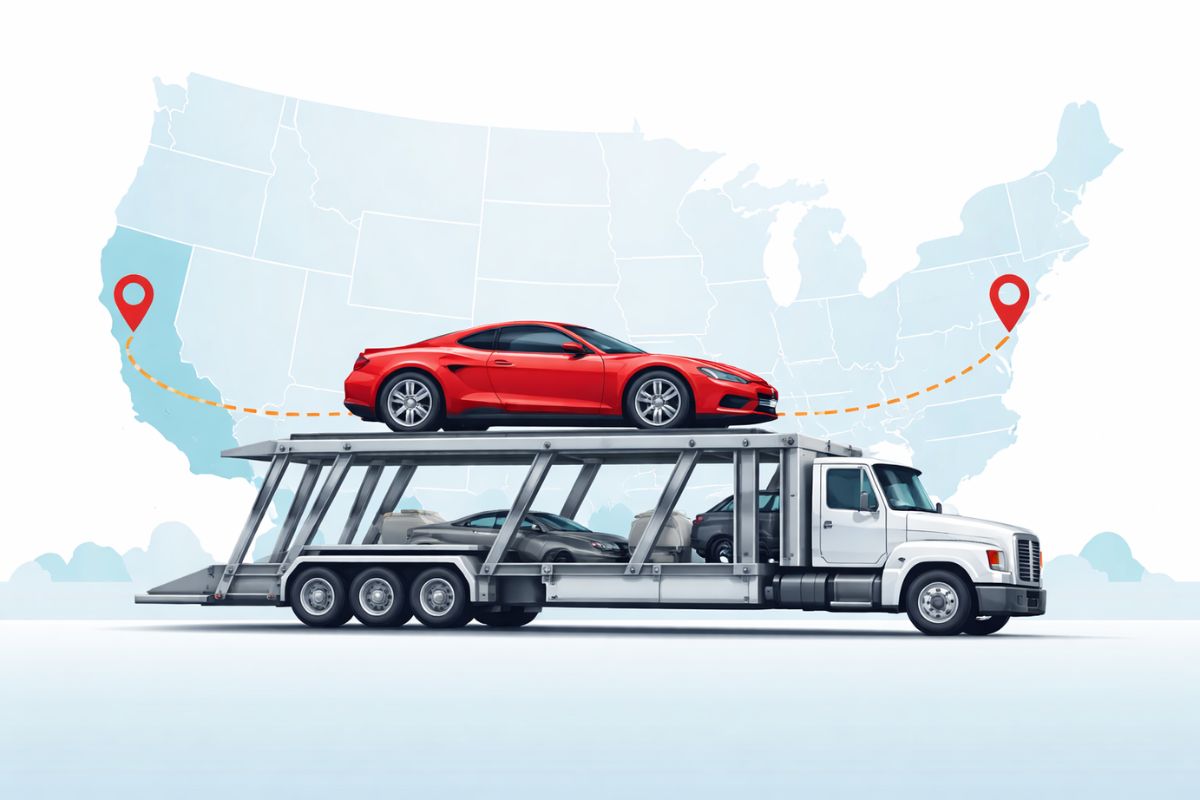

Key Takeaways
Is $3,000 open transport from Florida to California normal?
It’s on the high side for open transport, but pricing swings with route, season, and vehicle value. Ask for the price-per-mile breakdown and confirm there’s no extra “dealer handling” fee added.
What’s the fastest way to save $500+ on this route?
The Cheapest way to ship car from Florida to California is usually open carrier + flexible pickup dates. Get 3–5 quotes, avoid “guaranteed pickup” upsells, and choose door-to-door only if it’s competitively priced.
When is enclosed shipping actually worth the extra cost?
Enclosed is worth it for rare classics, fresh paint, or six-figure cars where you want maximum protection from road debris and weather. For most daily drivers and SUVs, open shipping is the smarter value.
Why do dealerships sometimes quote higher shipping prices?
Dealers often outsource to a broker and add margin for convenience. If you want to cut that, arrange shipping yourself and only pay a small deposit upfront—never the full transport cost before pickup.
How can I confirm the shipper is legit before paying?
Always verify the company’s authority before booking. Use the FMCSA Licensing & Insurance carrier search or the SAFER Company Snapshot to confirm their USDOT/MC status is active.
Why do cheaper online quotes sometimes take longer to pick up?
Very cheap quotes can sit because carriers choose loads that fit their route and pay enough to make the trip profitable. If timing matters, raise your price slightly or widen your pickup window.
What should I ask before I commit to any quote?
Before you commit, ask about pickup/delivery windows, insurance limits, payment method, and cancellation terms. The Cheapest way to ship car from Florida to California isn’t “lowest number”—it’s the best mix of price, speed, and protection.
Table of Contents
Table of Contents
The cheapest way to ship car from Florida to California can be hundreds cheaper than what a dealer quotes—and most people don’t realize it until they’re already locked into the deal.
In the forum thread, the buyer was hit with $3,000 for open transport, plus another $1,000 for enclosed. Online quotes looked closer to $1,100–$1,250, but that raises the real question: is it legit, will it take forever, or is the dealer simply adding markup for “convenience”?
This list breaks down 13 practical ways to save $500+ fast, without gambling on sketchy carriers or endless delays. You’ll learn what drives pricing, what to ask, and how to avoid overpaying.
See pricing, delivery times, and options for open vs enclosed transport.
California Car Shipping GuideWe’ll also compare open vs enclosed and explain why california to florida car shipping often follows the same pricing logic—route demand, timing, and how flexible you are.
What does it really cost to ship a car from Florida to California?
A fair Florida-to-California rate is usually in the mid-$1,000s to low-$2,000s for open transport, with outliers above that when demand spikes, the car is larger, or pickup timing is strict.
On real long-haul lanes like Boca Raton, FL → San Francisco, CA, pricing depends on miles, carrier availability, and vehicle class (sedan vs SUV vs exotic). Companies like Montway, marketplaces like uShip, and brokers sourcing on dispatch boards all follow the same math: if a carrier can’t profitably run the lane, the quote rises or the pickup slows down.
Quick reality checks (stats):
- Florida → California long-haul shipping is often $1,445–$2,094, and delivery commonly takes 7–15 days. (Source: FreightWaves Checkpoint)
- Enclosed shipping typically costs 30–60% more than open. (Source: FreightWaves open vs enclosed)
- For long routes (1,500+ miles), open transport can average around ~$0.64/mile on major lanes. (Source: Montway open transport)
Mini FAQ (Cost)
Is $1,100 always legit?
Sometimes, but ultra-low quotes often mean longer wait time or a later price change.
Why do quotes swing so much?
Seasonality, route demand, vehicle size, and how fast you need pickup change the price fast.
Does california to florida car shipping cost the same?
Often similar, but lane demand and seasonal movement can shift which direction is cheaper.
Why would a dealership quote $3,000 for open shipping?
Dealers can charge more because they’re bundling convenience, margin, and “we’ll handle it” liability into one price—especially if they use a preferred broker instead of shopping the open market.
In the forum thread, one of the biggest clues was simple: many dealerships don’t even like arranging shipping because of risk and coordination headaches. Some will do it anyway, but they often choose the easiest solution (a known broker or partner) rather than the cheapest.
Translation: the dealer quote may be “real,” but it might not be the best deal.
Mini FAQ (Dealer pricing)
Can I arrange my own transport after signing the deal?
Usually yes—just coordinate release paperwork and confirm the dealer is okay with your carrier pickup.
Is dealer shipping always a scam?
Not always. Sometimes it’s just expensive convenience.
How do I ask without starting a fight?
Ask for the per-mile rate, service level, and whether it includes insurance upgrades or expedited pickup.
How does car shipping really work in the U.S.?
Most “car shipping companies” you see online are brokers, not fleets, and they match your order to an independent carrier (owner-operator) based on price, route, and timing.
That’s why reviews can feel inconsistent: your shipment quality often depends on the actual carrier, not just the broker’s marketing. When you book, you’re usually dealing with dispatch, route coverage, and carrier acceptance—not a single company running trucks everywhere.
To check legitimacy, rely on FMCSA tools like SAFER Company Snapshot and Licensing & Insurance.
Mini FAQ (Brokers vs carriers)
Is a broker bad?
No—brokers can be great. You just need clear terms and a real carrier assigned.
How do I know who’s actually transporting my car?
Ask for the carrier’s USDOT/MC once assigned and verify on FMCSA.
Should I pay everything upfront?
Avoid full prepay. A small deposit is normal; balance is often due at pickup or delivery.
How can you save $500+ fast on Florida-to-California shipping?
The Cheapest way to ship car from Florida to California is almost always a combination of flexibility + clean quoting + smart risk control, not just choosing the lowest number.
Below are 13 real tactics that work, pulled from exactly the problems people face in that forum scenario.
1) Get 3–5 quotes (but compare the same service)
Don’t compare “open door-to-door” vs “terminal” vs “expedited” like they’re equal. Ask each quote to confirm: open/enclosed, door-to-door, timing, and fees.
2) Ask for the price-per-mile (it exposes markups fast)
A dealership quote looks different when you do the math. If the per-mile is wildly higher than market, you’ve found the padding.
3) Use open transport unless your vehicle truly needs enclosed
Open is the standard for a reason. Enclosed is protection—great for certain cars, unnecessary for many. (FreightWaves)
4) Add pickup flexibility (this is where big savings happen)
A 1–3 day pickup window often costs more than a 5–10 day flexible window.
5) Avoid “guaranteed pickup” unless you absolutely need it
Guarantees can add hundreds. Pay for speed only if timing matters more than money.
6) Choose “door-to-door” only if access is easy
If you’re in a tight neighborhood or downtown, meeting at a nearby wide parking lot can reduce headaches and sometimes cost.
7) Ship from major metro-to-metro when possible
Boca Raton → SF can be pricier than Miami/Ft Lauderdale area → Bay Area hub depending on carrier lanes.
8) Skip dealership shipping and book independently
Even if you’ve already signed, you can often tell the dealer:
“I’ll arrange pickup. Please have it ready for my carrier.”
9) Avoid ultra-cheap quotes that will “sit”
One forum comment nailed it: cheap loads can wait because carriers take the best-paying loads first. Paying a little more can save days.
10) Confirm the vehicle runs (INOP costs more)
Non-running cars need winches and special handling. If it’s operable, make sure it’s listed as operable.
11) Ask about total insurance coverage in writing
Don’t assume “fully insured” means your exact risk is covered. Verify cargo coverage and claim process. (fmcsa.dot.gov)
12) Watch for bait-and-switch tactics
One common scam pattern is a low quote, then price jumps after deposit. (Source: Kiplinger scam warning)
13) Time your shipment strategically (season matters)
Snowbird season and peak moving months increase demand and pricing. Booking earlier or choosing flexible dates can cut costs.
Mini FAQ (Saving money)
What’s the #1 fastest way to save $500?
Drop enclosed, add date flexibility, and quote multiple brokers.
Should I pick the lowest quote?
Pick the best value: fair price + verified authority + clear terms.
Will the cheapest option damage my car?
Open shipping is normal. The risk is usually delays or poor communication—not major damage.
Open vs enclosed: what’s the best deal for your situation?
Enclosed is typically worth paying extra for when your car is high value, low-clearance, or collector-grade, but open shipping is usually the best value for most vehicles and the easiest to schedule. (FreightWaves)
If you’re shipping a luxury car (like the Lexus example from the forum), enclosed can make sense—but $4,200 enclosed is still something you should compare against multiple quotes and real lane pricing.
Rule of thumb:
- Open = best price + fastest availability
- Enclosed = best protection + higher cost + fewer carriers
Mini FAQ (Open vs enclosed)
How much more is enclosed usually?
Commonly 30–60% higher than open. (FreightWaves)
Is open safe for a luxury car?
Usually yes, but enclosed adds peace of mind against debris/weather.
Can enclosed take longer to schedule?
Yes—fewer enclosed carriers run every lane consistently.
How do you vet a shipper so “cheap” doesn’t turn into a headache?
The best protection is verifying a company’s authority, confirming the contract terms, and avoiding high-pressure payment tactics.
Use these checks before you pay anyone:
- Verify broker/carrier via FMCSA SAFER
- Confirm authority/insurance via FMCSA Licensing & Insurance
- Ask who the actual carrier is once assigned (USDOT/MC)
Mini FAQ (Verification)
What’s the fastest legit check?
FMCSA SAFER snapshot + Licensing & Insurance search.
Do I need the carrier’s MC number?
Yes—especially once a carrier is assigned.
What payment method is safest?
Avoid full prepay. Be cautious with non-refundable deposits.
What should you do before booking?
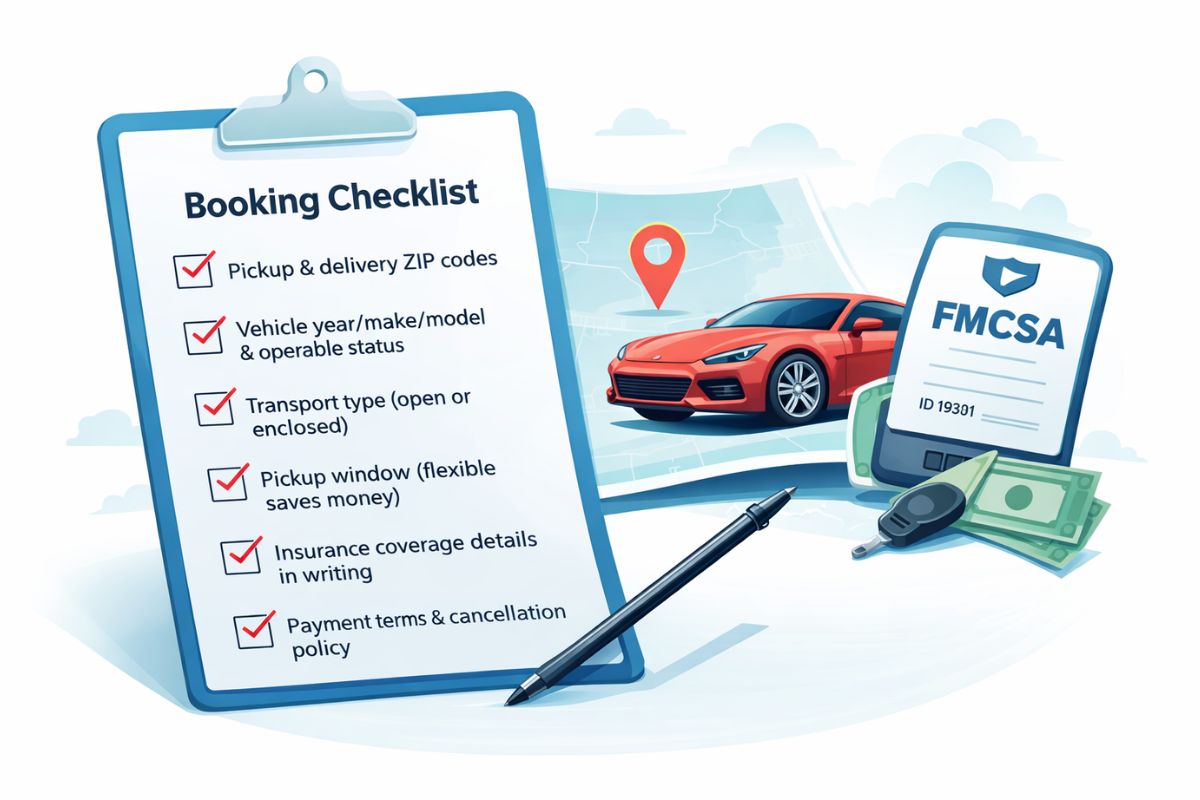
A clean booking prevents 90% of problems.
Booking checklist (quick and practical):
- Pickup & delivery ZIP codes (or nearest metro)
- Vehicle year/make/model + operable status
- Transport type (open or enclosed)
- Pickup window (flexible saves money)
- Insurance coverage details in writing
- Payment terms + cancellation policy
- Carrier assigned + verified on FMCSA
Pricing & timeline tables (use these to compare options)
Typical Florida → California Shipping Options (High-level)
| Service Type | Best For | Typical Price Range | Typical Transit Time |
|---|---|---|---|
| Open Transport | Most vehicles | $1,400–$2,300 | 7–15 days |
| Enclosed Transport | Luxury/classic/high-value | +30–60% vs open | 7–15 days (sometimes longer to schedule) |
| Expedited Pickup | Tight deadlines | Adds $200–$800+ | Faster pickup, similar transit |
(Price and timing ranges vary by season and lane.)
What changes the price the most?
| Cost Lever | What You Change | Typical Impact |
|---|---|---|
| Pickup flexibility | 1–3 days → 5–10 days | Save $200–$600 |
| Open vs enclosed | Enclosed → Open | Save $500–$1,200+ |
| Route convenience | Remote → metro hub meeting | Save $50–$250 |
| Vehicle condition | Inoperable → operable | Save $150–$400 |
| Season timing | Peak → off-peak | Save $100–$500 |
Final tip: the cheapest option isn’t the lowest quote
The Cheapest way to ship car from Florida to California is the option that’s fairly priced, verified, and won’t waste your time—because delays, bad communication, and surprise fees get expensive fast.
If you want, I can also:
- write the full “13 Ways” section as a tight listicle for Google snippets,
- create a meta title + meta description,
- or generate a FAQ schema block for WordPress.