

If you’re relocating for work, moving your family, starting college, or buying a vehicle out of state, Car Shipping to and from California can save you days of driving, wear-and-tear, and unexpected travel costs. The process looks complicated at first—but it’s basically a checklist: pick the right transport method, vet the company, prepare the vehicle, and document everything the right way.
Hubs
Ship Car to California
California to Florida Car Shipping
Below is a step-by-step guide designed for everyday people (not logistics pros) who want a smooth, safe, and predictable experience with Car Shipping to and from California.
Table of Contents
Table of Contents
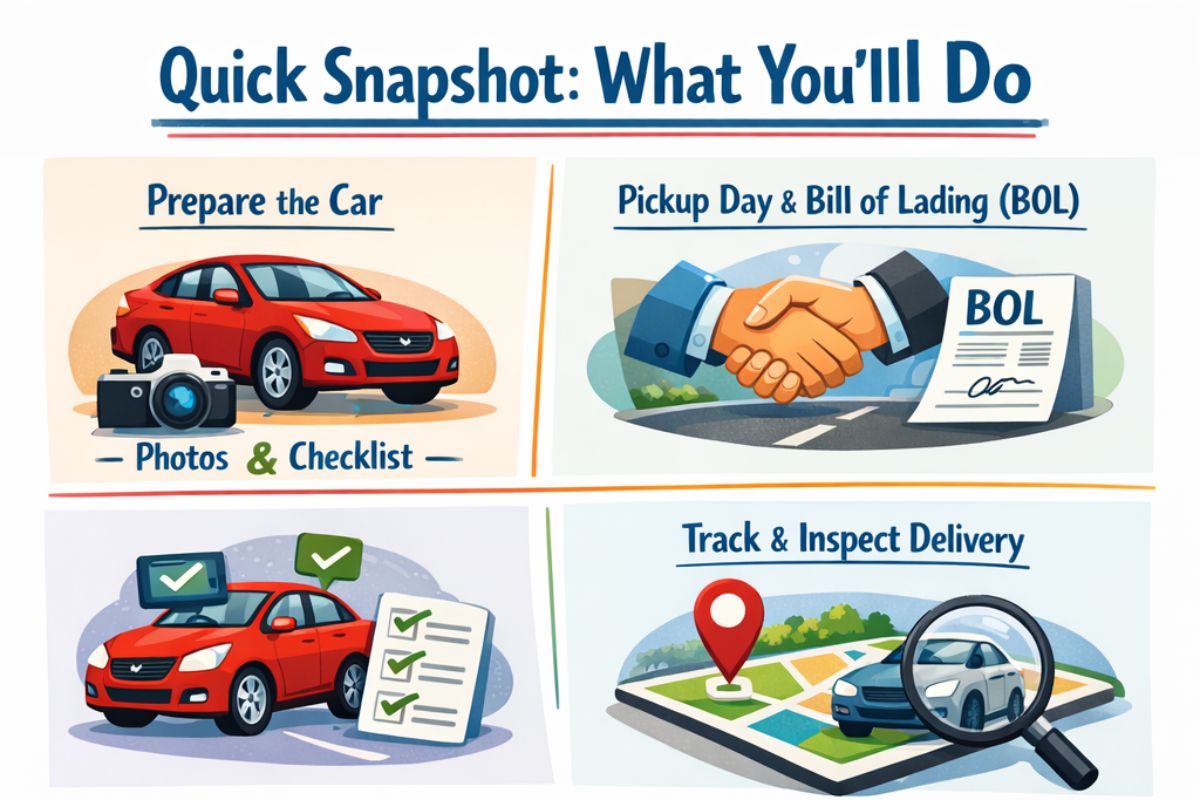
Quick Snapshot: What You’ll Do
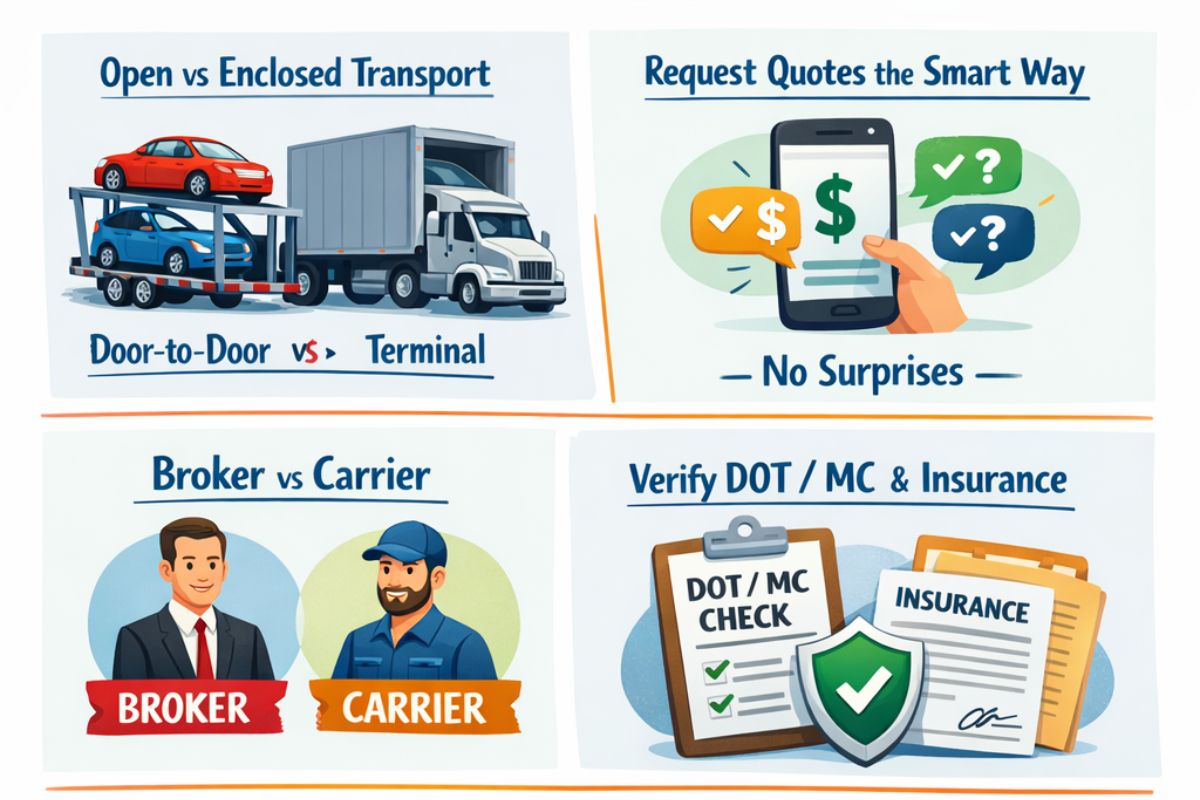
- Choose open vs enclosed (and door-to-door vs terminal)
- Request quotes the smart way (without surprises)
- Decide broker vs carrier
- Verify legitimacy with DOT/MC and insurance details
- Prepare the car (photos + checklist)
- Handle pickup day + Bill of Lading (BOL)
- Track transit and complete delivery inspection
What “Car Shipping to and from California” Really Means
Car Shipping to and from California is the professional transport of your vehicle on a car carrier (most commonly a multi-car trailer) from one location to another. This can be:
- To California: bringing a car into CA (often for relocation, military PCS, new job, or long-term travel)
- From California: shipping a vehicle out of CA (common for return moves, selling a vehicle, or seasonal relocation)
California is a high-demand market—major hubs like Los Angeles, San Diego, San Francisco Bay Area, Sacramento, Fresno, and San Jose connect to national routes. That’s good news: more route density often means more carrier availability, especially on major corridors like I-5, I-10, I-80, and I-15.
Step 1: Pick the Right Shipping Method
The best choice depends on your vehicle value, timeline, and risk tolerance.
Open Transport (Most Common)
Open auto transport is the standard option used by most people moving with everyday vehicles.
- Pros: lower cost, widely available, faster scheduling on busy routes
- Cons: vehicle is exposed to weather and road debris (normal for most cars)
If your priority is affordability, open transport is often the default for Car Shipping to and from California.
Enclosed Transport (Best Protection)
Enclosed auto transport protects your vehicle inside a covered trailer.
- Pros: maximum protection, ideal for classics, exotics, high-value cars
- Cons: higher cost, sometimes tighter scheduling
If you’re shipping a classic Mustang, collectible JDM, luxury SUV, or showroom car, enclosed shipping is often the “sleep better at night” choice.
Expedited / Guaranteed Pickup (When Timing Is Everything)
If you have a strict move-out date, flight schedule, or job start date, expedited service can make sense.
- Pros: priority pickup, reduced uncertainty
- Cons: higher price
Door-to-Door vs Terminal-to-Terminal
- Door-to-door: pickup and delivery near your home (sometimes a nearby meeting point due to truck size)
- Terminal-to-terminal: you drop off/pick up at a facility (can be cheaper, but less convenient and may add waiting time)
For most relocating families, door-to-door is the most practical style of Car Shipping to and from California.
Step 2: Understand What Actually Drives the Price
Car shipping prices aren’t random—they’re a math problem shaped by a few key factors:
Main cost drivers
- Distance & route density: major routes are usually cheaper than remote routes
- Vehicle size/weight: SUVs, trucks, and oversized vehicles cost more
- Vehicle condition: inoperable cars require winches or special handling
- Seasonality: summer and holidays raise demand; snowbird seasons shift pricing
- Timing flexibility: a wider pickup window can lower cost
- Transport type: enclosed and expedited cost more
A useful mindset: you’re not just buying miles—you’re buying schedule coordination. The more flexible you are, the more options carriers have, and the better your price tends to be.
Step 3: Get Quotes Without Getting Burned
A quote should be clear, complete, and realistic.
When requesting quotes for Car Shipping to and from California, make sure you provide:
- pickup city/ZIP and delivery city/ZIP
- vehicle year/make/model (and whether it runs)
- preferred timeframe (pickup window)
- open vs enclosed preference
What a “good” quote includes
- transport type (open/enclosed)
- estimated pickup window (not just “tomorrow”)
- estimated transit time
- payment terms (deposit vs balance due)
- insurance summary (coverage type and limits)
- cancellation/reschedule policy
Red flag: a price that’s dramatically lower than others often means the quote is not viable at real market rates—leading to delays, last-minute price changes, or carrier no-shows.
Step 4: Broker vs Carrier (Choose the Right Fit)
This is one of the most misunderstood parts of Car Shipping to and from California.
Broker
A broker coordinates your shipment by matching you with a carrier.
- Pros: more network access, flexible options, easier to find availability
- Cons: quality varies; some brokers overpromise to win the booking
Carrier
A carrier is the company that owns the trucks and moves the vehicle.
- Pros: direct communication, fewer middle steps
- Cons: limited routes/schedules depending on their lanes
A simple rule:
- If your route is common and your dates are flexible, either can work.
- If your situation is complex (tight dates, inoperable vehicle, enclosed, remote areas), a strong broker network can be helpful—as long as it’s reputable.
Step 5: Vet the Company Like a Pro (In 5 Minutes)
You don’t need to be an expert—you need to be systematic.
The “Must-Check” List
1) DOT/MC verification
- Ask for their USDOT and/or MC number
- Make sure the authority is active (legit transport companies should be transparent)
2) Insurance clarity
- Ask what type of cargo insurance applies
- Ask how claims are handled (and what documentation is needed)
3) Contract terms
- Read cancellation, pickup windows, and payment terms
- Look for vague language that allows unlimited delays without accountability
4) Reviews with context
- Don’t just count stars—read patterns:
- repeated complaints about price changes
- chronic delays with no communication
- “bait-and-switch” behavior
Big red flags
- pressure to pay immediately “to lock in the truck”
- refusing to provide DOT/MC details
- “guaranteed” delivery times that ignore distance and route realities
- insisting on unusual payment methods with no paperwork
Step 6: Prepare Your Car (The Checklist That Prevents Disputes)
Preparation is where smooth shipping happens.
Before pickup
- Wash the exterior (helps you spot and document existing scratches)
- Remove valuables and personal items (policies vary; avoid headaches)
- Keep fuel around ¼ tank
- Disable alarms if needed
- Check for leaks; note any existing mechanical issues
- Take time-stamped photos/videos:
- front, back, both sides
- wheels/tires
- close-ups of existing damage
- dashboard/odometer if relevant
If your vehicle is inoperable, be upfront. Inoperable shipping is possible—but it changes equipment needs and pricing.
Step 7: Pickup Day (What to Expect in California and Beyond)
On pickup day for Car Shipping to and from California, expect one key document:
The Bill of Lading (BOL)
The BOL is your condition report and receipt.
- The driver will inspect the vehicle and note visible condition
- You will sign to confirm the recorded condition
Important: If you see any pre-existing damage that’s not written down, insist it’s added before you sign. This isn’t “being difficult”—it’s preventing confusion at delivery.
Meeting Points Are Normal
Large carriers may not fit in tight neighborhoods, downtown streets, or low-clearance areas. A driver may request a nearby meeting point:
- big parking lot
- wider street
- commercial area
That’s normal and often makes pickup faster.
Step 8: Transit Updates and Tracking (Realistic Expectations)
Most shipments include updates via dispatcher, driver calls/texts, or periodic status checks. Good communication looks like:
- a confirmed pickup window
- a reasonable ETA range (not a fake “exact minute” promise)
- proactive updates if delays occur due to weather, traffic, DOT hours-of-service rules, or route changes
A helpful mindset: car shipping is scheduled logistics, not rideshare. Even premium services operate within compliance, safety, and route constraints.
Step 9: Delivery Day Inspection (The Most Important 10 Minutes)
When the car arrives, your job is to verify condition before you finalize paperwork.
Delivery checklist
- Inspect the car in good light (or use a phone flashlight)
- Compare to your pickup photos/videos
- Compare to the BOL notes
- Note any new damage on the BOL before signing “received”
- Take fresh photos immediately
If something is wrong, stay calm and document clearly. Claims are paperwork-driven—good documentation is your best protection.
Open vs Enclosed: Quick Comparison Table
| Feature | Open Transport | Enclosed Transport |
|---|---|---|
| Best for | Daily drivers, most relocations | Classic, luxury, high-value vehicles |
| Cost | Lower | Higher |
| Protection | Standard | Maximum |
| Availability | High | Moderate |
| Typical use case | Family move, job relocation | Collector car, showroom delivery |
Typical Timeframes for Car Shipping to and from California
Transit times depend on distance, route, weather, and pickup scheduling. Here’s a realistic planning guide:
| Route Type | Pickup Window (Typical) | Transit Time (Typical) |
|---|---|---|
| Neighboring states | 1–3 days | 1–3 days |
| Medium distance | 1–5 days | 3–7 days |
| Cross-country | 1–7 days | 7–12 days |
Tip: Plan around a range, not a single date. If you need a hard deadline, consider expedited options for Car Shipping to and from California.
Cost Expectations (What’s “Normal”)
Prices change with season, lane demand, and vehicle details. Instead of chasing the lowest number, aim for fair market pricing plus reliability.
| Distance Category | Typical Price Range (Open) | Enclosed Range (Approx.) |
|---|---|---|
| Short | Lower | Higher |
| Medium | Mid | Higher-mid |
| Long / Cross-country | Higher | Premium |
Cost-saving tips
- Choose a wider pickup window (3–7 days)
- Use open transport for standard vehicles
- Meet the driver at an accessible location
- Avoid peak summer move dates if possible
- Book earlier when you know your relocation timeline
Common California Scenarios (So You Can Choose Faster)
Relocating to California for work:
You usually want door-to-door, a reasonable pickup window, and clear ETA expectations. Prioritize communication and legitimacy over “too-good-to-be-true” speed.
Shipping a car from California after a temporary stay:
Flexibility helps. If you can wait a few days for pickup, you often get better pricing and smoother scheduling.
Student move (college):
Avoid last-minute bookings during peak semester start. Plan early, keep documentation, and use a checklist.
Classic or luxury shipping to/from CA:
Enclosed transport plus clear insurance documentation is the common sense move. Treat it like shipping art: protection and paperwork matter.
FAQ: Car Shipping to and from California
How do I avoid scams when booking Car Shipping to and from California?
Verify DOT/MC details, demand clear written terms, and avoid extreme lowball pricing.
Is door-to-door really “door-to-door”?
Usually it means as close as safely possible. Meeting points are normal when streets are tight.
Can I ship personal items in the car?
Many carriers discourage it or limit it. Personal items can create liability and inspection issues. Keep the car mostly empty.
What if my car doesn’t run?
Inoperable shipping is possible, but pricing and equipment needs change. Always disclose it upfront.
What document matters most?
The Bill of Lading (BOL)—it’s the official condition record at pickup and delivery.
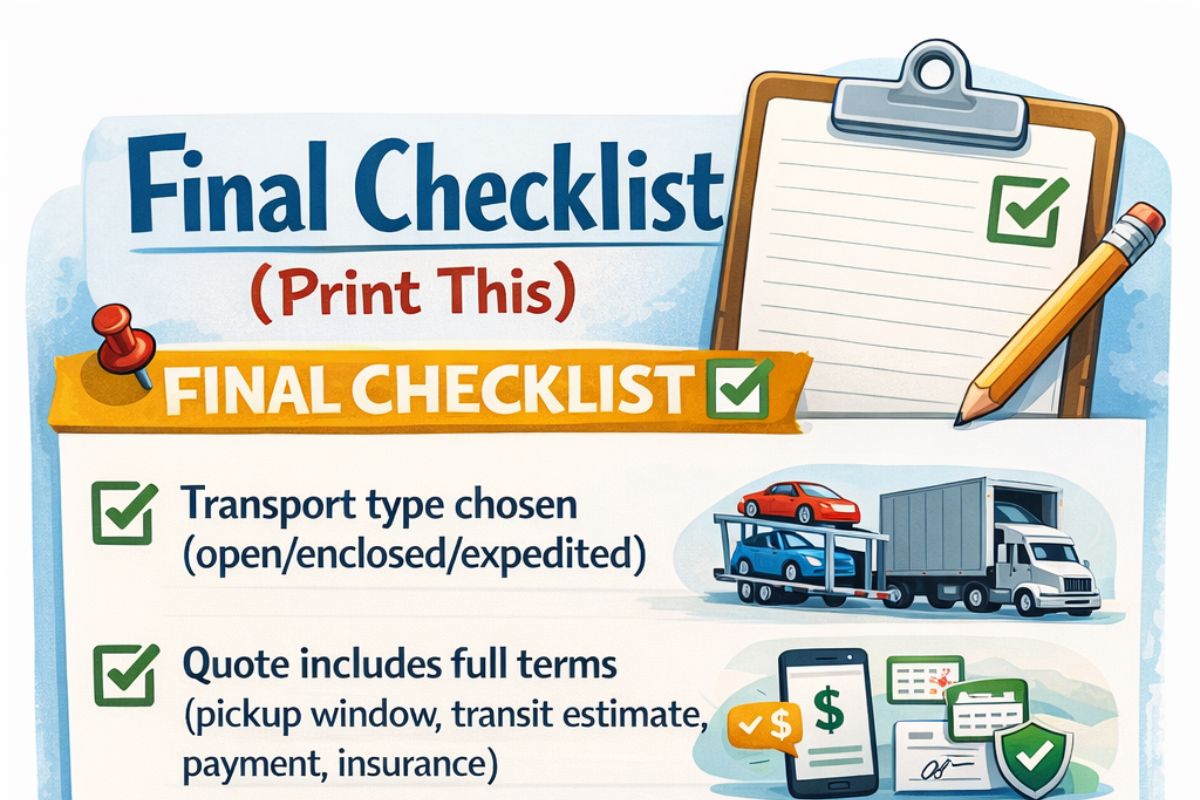
Final Checklist (Print This)
- Transport type chosen (open/enclosed/expedited)
- Quote includes full terms (pickup window, transit estimate, payment, insurance)
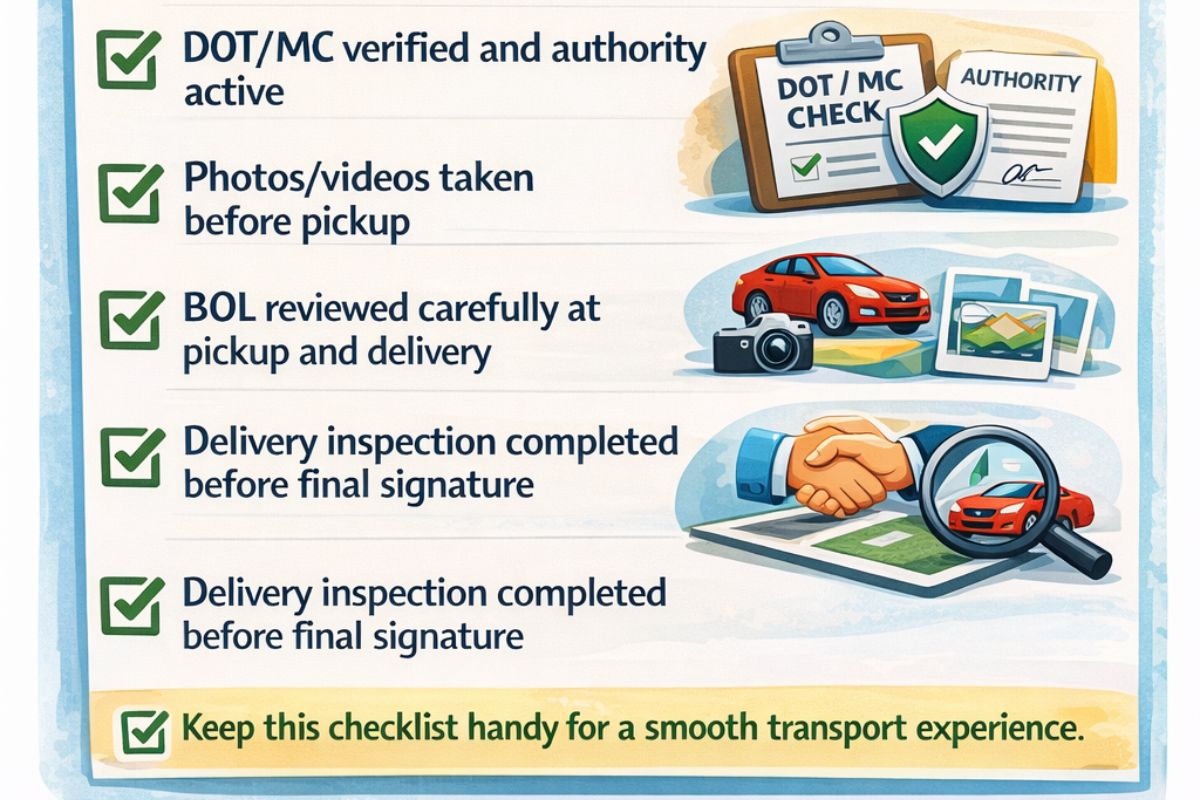
- DOT/MC verified and authority active
- Photos/videos taken before pickup
- BOL reviewed carefully at pickup and delivery
- Delivery inspection completed before final signature
Ready to Book with Confidence
Car Shipping to and from California becomes simple when you treat it like a controlled process: choose the right method, verify legitimacy, document condition, and keep expectations realistic.
If you follow the steps above, you’ll avoid the most common traps—and your relocation will feel a lot less stressful.