

What is the Cheapest Way to Ship a Car to Another State?
When looking for the most affordable way to transport a vehicle to another state, several options can help keep costs down without sacrificing reliability. Let’s explore the most budget-friendly approaches to car shipping.
Open Transport: The Budget-Friendly Standard
Open transport is typically the cheapest way to ship a car to another state, costing 30-40% less than enclosed options. This method exposes your vehicle to the elements but provides adequate protection for most standard vehicles. For sedans, SUVs, and everyday vehicles, open transport offers the best value while maintaining safety standards.
If you’re looking to get a quick estimate for open transport, call us at 478-200-5888 or use our online quote calculator for instant pricing.
Flexible Pickup and Delivery Dates
One of the most effective ways to reduce state to state auto transport costs is offering flexibility with your pickup and delivery dates. By providing a 3-7 day pickup window rather than requiring a specific date, you can save 10-15% on your shipping costs. This flexibility allows carriers to optimize their routes and pass savings on to you.
Terminal-to-Terminal vs. Door-to-Door
While door-to-door service offers maximum convenience, terminal-to-terminal shipping can reduce your costs by 10-20%. With terminal-to-terminal service, you drop off and pick up your vehicle at designated shipping terminals rather than having it collected from and delivered to specific addresses. This option works well if you live near a terminal and don’t mind the extra step.
Popular Routes and Lane Pricing
Shipping along popular routes between major cities typically costs less than transporting to remote locations. For example, shipping a car from California to Texas or from New York to Florida often costs less per mile than shipping to less-traveled destinations. High-volume routes benefit from established carrier networks and more competitive pricing.
Vehicle Size and Weight Considerations
Smaller, standard-sized vehicles cost less to ship than larger ones. A compact sedan will typically cost 15-25% less to transport than a full-sized SUV or truck. When getting quotes, be specific about your vehicle’s make and model to ensure accurate pricing. If you’re deciding between shipping multiple vehicles, prioritizing your smaller car can lead to significant savings.
How to Lower Your Quote: A Money-Saving Checklist
Need a Quick Quote for Your Vehicle Transport?
Get an instant estimate for shipping your vehicle to another state. Our transparent pricing includes insurance and all standard fees.
Or call us directly: 478-200-5888
Use This Checklist to Reduce Your Car Shipping Costs:
- Provide a flexible pickup window of 5-7 days
- Ensure your vehicle is operable (inoperable vehicles cost 25-50% more)
- Choose locations with easy access for large car carriers
- Book during off-peak seasons (avoid summer and major holidays)
- Compare quotes from multiple providers but beware of suspiciously low prices
- Book in advance (7-14 days) when possible
- Consider terminal-to-terminal shipping if convenient
- Ship along major routes between metropolitan areas
- Remove personal items and keep only a quarter tank of gas
- Ask about available discounts (military, student, senior, etc.)
“Too Cheap” Warning Signs
Beware of these red flags when comparing auto transport quotes:
- Prices significantly below market average (30%+ lower than other quotes)
- No MC/DOT number to verify legitimacy
- Requiring full payment upfront before scheduling
- No clear contract or terms of service
- Poor or non-existent online reviews
- Vague or changing delivery timeframes
When buying a car online out of state, it’s especially important to work with reputable transport companies. If a quote seems too good to be true, it usually is. At John 3:16 Transport, we provide transparent, competitive pricing without hidden fees or bait-and-switch tactics.
How Much Is It to Send My Car to Another State?
Typical Price Ranges by Distance
| Distance | Sedan (Average) | SUV/Truck (Average) | Delivery Timeframe |
| Short (0-500 miles) | $450-$700 | $550-$850 | 1-3 days |
| Medium (500-1,500 miles) | $650-$1,000 | $800-$1,200 | 3-7 days |
| Long (1,500+ miles) | $900-$1,500 | $1,100-$1,800 | 7-14 days |
Note: Prices vary based on route, season, and vehicle specifications. For coast to coast auto transport, expect to be in the upper range of the long-distance category.
What Affects Cost the Most
Primary Cost Factors:
- Distance and Route: The farther your vehicle travels, the more it costs, though the per-mile rate decreases with distance
- Transport Type: Open transport (cheaper) vs. enclosed transport (premium protection)
- Service Type: Door-to-door (convenient but costlier) vs. terminal-to-terminal (more affordable)
- Vehicle Size: Larger vehicles like SUVs and trucks occupy more space and cost more to ship
Secondary Cost Factors:
- Vehicle Condition: Operable vs. inoperable (non-running vehicles require special equipment)
- Seasonality: Summer and January typically have higher rates due to increased demand
- Urgency: Expedited shipping commands premium prices
- Route Popularity: Less traveled routes cost more per mile
- Fuel Prices: Current fuel costs directly impact shipping rates
How to Estimate Car Shipping Cost
To get an accurate estimate for transporting your vehicle to another state, follow these steps:
- Determine the exact distance using zip codes (not just city names)
- Identify your vehicle’s make, model, year, and running condition
- Decide between open or enclosed transport
- Choose between door-to-door or terminal-to-terminal service
- Consider your timeline and flexibility
- Get quotes from 2-3 reputable companies
For the most accurate pricing, call 478-200-5888 to speak with our transport specialists or use our instant quote calculator.
Quick Cost Examples
Example 1: Economy Option
Vehicle: Toyota Camry (Sedan)
Transport: Open carrier
Distance: Chicago to Dallas (925 miles)
Flexibility: 7-day pickup window
Estimated Cost: $750-$850
Example 2: Standard Option
Vehicle: Ford Explorer (SUV)
Transport: Open carrier
Distance: New York to Miami (1,280 miles)
Flexibility: 3-day pickup window
Estimated Cost: $950-$1,100
Example 3: Premium Option
Vehicle: BMW 5 Series (Luxury Sedan)
Transport: Enclosed carrier
Distance: Los Angeles to Boston (3,000 miles)
Flexibility: Specific pickup date
Estimated Cost: $1,800-$2,200
For shipping a car from Florida to California or other cross-country routes, expect to pay premium rates due to the long distance involved.
Is It Cheaper to Drive or Ship My Car?

A Quick Decision Rule
When deciding whether to drive or ship your vehicle to another state, consider the total cost, time investment, vehicle wear and tear, and personal safety. As a general rule: For distances under 300 miles, driving is usually more economical. For distances over 1,000 miles, shipping often becomes the better value when all factors are considered.
Cost Breakdown: Driving Your Vehicle
- Fuel: Calculate your vehicle’s MPG × distance ÷ current gas price (average sedan: $0.13-$0.20 per mile)
- Accommodations: Hotels/motels ($100-$200 per night, assuming 400-500 miles per day)
- Food: Meals and snacks ($40-$75 per day)
- Time Value: Days off work or away from family
- Vehicle Wear: Accelerated depreciation, oil changes, tire wear (approximately $0.10-$0.15 per mile)
- Tolls: Varies by route ($5-$100+ depending on distance and highways)
- Potential Risks: Accidents, breakdowns, weather delays
Cost Breakdown: Shipping Your Vehicle
- Base Shipping Rate: Varies by distance, vehicle, and service type ($0.40-$1.00 per mile)
- Insurance: Typically included in reputable carrier quotes
- Optional Services: Expedited shipping, enclosed transport, etc.
- Transportation to/from Terminals: If not using door-to-door service
- Time Savings: No personal travel time required
- Reduced Vehicle Wear: No additional mileage on your odometer
Comparison Table: Drive vs. Ship
| Factor | Driving Yourself | Shipping Your Vehicle |
| Direct Costs | Lower for short distances, higher for long distances | Higher for short distances, more economical for long distances |
| Time Investment | Significant (days of travel) | Minimal (arrangement only) |
| Vehicle Wear | Substantial (hundreds/thousands of miles added) | None (zero miles added) |
| Convenience | Low (requires personal time and effort) | High (handled by professionals) |
| Risk | Higher (road hazards, fatigue, weather) | Lower (professional drivers, insurance coverage) |
When Driving Wins vs. When Shipping Wins
Driving Makes More Sense When:
- Distance is under 300 miles
- You need your vehicle immediately
- You enjoy road trips
- You’re moving with pets who can travel with you
- You need to transport items in your vehicle
Shipping Makes More Sense When:
- Distance exceeds 1,000 miles
- You’re transporting multiple vehicles
- You have a luxury, classic, or high-value vehicle
- You’re on a tight schedule
- You want to avoid wear and tear on your vehicle
- You’re concerned about safety on unfamiliar roads
For those considering moving cross country, shipping your vehicle often provides the best combination of convenience, vehicle protection, and overall value.
What is the Most Cost-Effective Way to Transport a Car?
Ready to Ship Your Vehicle?
Get a competitive quote from John 3:16 Transport for your interstate vehicle shipping needs. We offer transparent pricing and reliable service.
Or call for immediate assistance: 478-200-5888
Pick the Right Service Level
Open vs. Enclosed Transport
For most standard vehicles, open transport offers the best value. It’s 30-40% cheaper than enclosed shipping while still providing reliable service. Reserve enclosed transport for high-value, classic, exotic, or luxury vehicles that need maximum protection from the elements and road debris.
When shipping a car from the East Coast to West Coast, the savings between open and enclosed transport can be substantial—often $500-$800 for cross-country moves.
Door-to-Door vs. Terminal Service
While door-to-door service offers maximum convenience, terminal-to-terminal service can save you 10-20% on shipping costs. If you live near a terminal and don’t mind dropping off and picking up your vehicle, this option provides excellent value. However, factor in your time and transportation costs to and from terminals when calculating total savings.
Choose a Trustworthy Company
The most cost-effective approach isn’t always the cheapest upfront. Working with a reputable auto transport company helps avoid hidden fees, delays, and potential damage issues that could cost more in the long run.
How to Verify a Transport Company’s Legitimacy:
- Check MC/DOT Numbers: Verify registration with the Federal Motor Carrier Safety Administration (FMCSA)
- Read Reviews: Look for detailed customer experiences on Google, Transport Reviews, and BBB
- Examine the Contract: Ensure all services, insurance coverage, and guarantees are clearly stated
- Verify Insurance: Confirm adequate coverage for your vehicle’s value
- Ask About Experience: Choose companies with established history in the industry
Insurance Basics
Understanding insurance coverage is crucial for cost-effective vehicle shipping. Most reputable carriers include basic insurance in their quotes, but it’s important to know what’s covered.
Standard Insurance Coverage Typically Includes:
- Protection against external damage during transit
- Coverage for accidents, collisions, and other carrier-caused damage
- Typical coverage limits of $100,000-$250,000 per carrier load
Important: Document your vehicle’s condition with photos before shipping to facilitate any potential claims.
For high-value vehicles or additional peace of mind, supplemental insurance may be worth considering. When shipping a car from Florida to Michigan or other valuable vehicles, the extra protection can be well worth the investment.
Documents & Preparation Checklist
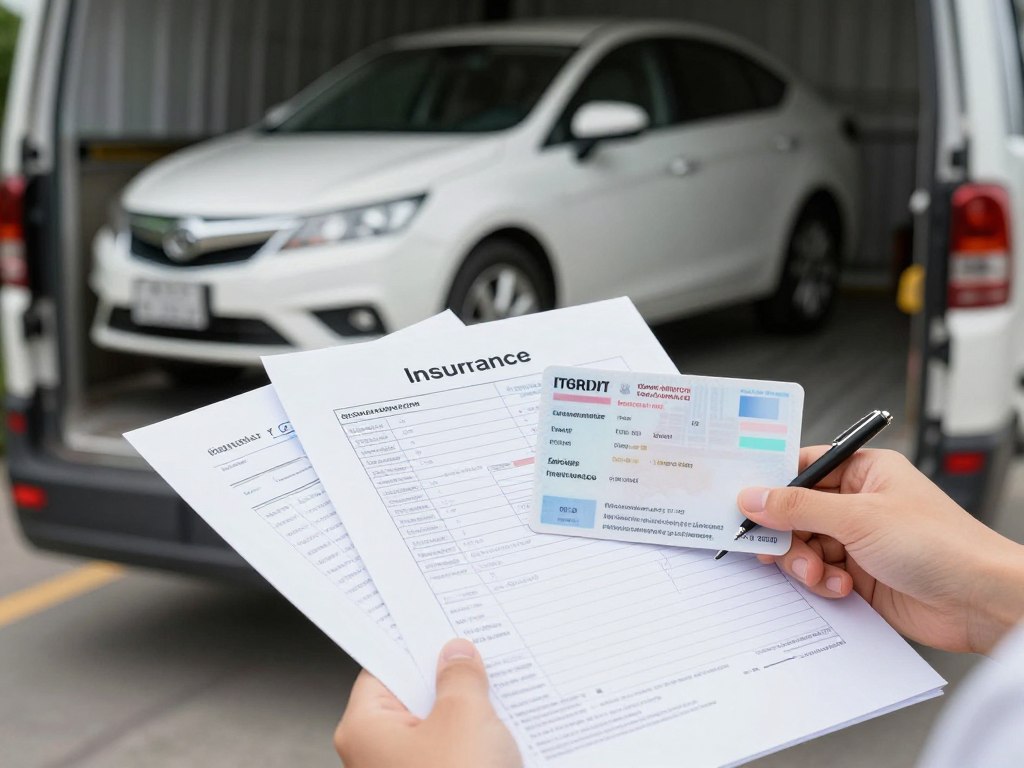
Required Documents:
- Valid photo ID (driver’s license or passport)
- Proof of ownership (title or registration)
- Bill of lading (provided by carrier)
- Written authorization (if someone else will receive the vehicle)
- Insurance information
Vehicle Preparation:
- Clean your vehicle thoroughly (for accurate inspection)
- Remove personal items (most carriers prohibit personal belongings)
- Maintain 1/4 tank of fuel (no more, no less)
- Disable alarms and toll transponders
- Document existing damage with dated photos
- Check for fluid leaks and mechanical issues
- Remove or secure loose parts and accessories
Can I Put Stuff in My Car When I Ship It?
Most auto transport companies have strict policies about personal items in vehicles during shipping. This is primarily due to insurance limitations, weight restrictions, and safety concerns.
What’s Generally Allowed:
- Factory-installed components and accessories
- Spare tire and jack
- Child safety seats (secured)
- Small emergency kit (under seat or in trunk)
What’s Typically Not Allowed:
- Household goods and personal belongings
- Electronics and valuables
- Clothing and luggage
- Food items
- Plants
- Firearms or weapons
- Hazardous materials
Some carriers may allow a small amount of personal items (up to 100 pounds) in the trunk, but this varies by company and is generally discouraged. If allowed, these items won’t be covered by the carrier’s insurance. For cross country movers, it’s best to transport personal belongings separately from your vehicle.
How Personal Items Can Affect Your Shipment
- Insurance Implications: Carrier insurance typically doesn’t cover personal items
- Weight Concerns: Additional weight affects fuel consumption and may exceed carrier limits
- Inspection Complications: Items can obscure vehicle condition during inspection
- Potential Delays: Carriers may refuse to transport vehicles with excessive personal items
- Security Issues: Items may shift during transport, potentially causing damage
For the most cost-effective and trouble-free experience when relocating your vehicle, plan to ship your car empty except for factory-installed equipment.
Cost-Effective Summary: Best Practices for Saving Money
Top Money-Saving Strategies for Vehicle Transport
- Choose open transport for standard vehicles (save 30-40%)
- Book 2-3 weeks in advance when possible
- Offer flexible pickup dates (3-7 day window)
- Ship during off-peak seasons (avoid summer and January)
- Consider terminal-to-terminal service if convenient
- Ensure your vehicle is clean, operable, and properly prepared
- Remove all personal items and maintain only 1/4 tank of fuel
- Compare quotes from 2-3 reputable carriers
- Ask about available discounts (military, student, multi-vehicle)
- Choose pickup/delivery locations accessible to large carriers
- Ship along major routes between metropolitan areas when possible
- Verify all costs upfront to avoid surprise fees
When shipping a car from Florida to New York or any other route, these strategies can help you secure the best possible rate without compromising on service quality or vehicle safety.
Frequently Asked Questions
Is it cheaper to ship a car by train or truck?
Shipping a car by truck is generally more practical and often more cost-effective than train transport. While train shipping might seem cheaper on paper, it’s limited to specific routes, requires terminal access at both ends, and often involves additional transportation costs to and from rail terminals. Truck transport offers more flexibility, door-to-door service options, and wider availability across the country.
What is the most trustworthy car shipping company?
The most trustworthy car shipping companies have several common characteristics: proper licensing (MC and DOT numbers), positive customer reviews, transparent pricing, clear contracts, and adequate insurance coverage. John 3:16 Transport meets all these criteria and has established a reputation for reliability and customer satisfaction in the vehicle transport industry.
Do I need insurance when shipping my car?
Reputable auto transport companies include basic cargo insurance that covers damage that might occur during transit. This insurance is typically included in your quote. However, this coverage has limitations and may not cover the full value of high-end vehicles. For valuable cars, you might consider purchasing additional insurance. Your personal auto insurance typically doesn’t cover commercial transport, but it’s worth checking with your provider.
How much does it cost to deliver a car 1,000 miles?
For a standard sedan traveling approximately 1,000 miles via open transport, expect to pay between $700-$1,000. SUVs and trucks typically cost $850-$1,200 for the same distance. These prices can vary based on route popularity, season, vehicle condition, and service type. For enclosed transport, add 30-40% to these estimates.
How to transport a car bought out of state?
When buying a car out of state, you have several transport options. Professional auto transport is the most convenient method, offering door-to-door service without adding mileage to your new purchase. Alternatively, you could drive it yourself, hire a professional driver, or use a tow dolly if you’re already renting a moving truck. For the smoothest experience, coordinate with both the seller and transport company in advance, ensuring all paperwork is in order before shipping.
Ready to Transport Your Vehicle to Another State?
Shipping a vehicle to another state doesn’t have to be complicated or stressful. With the right preparation and a reliable transport partner, you can ensure your vehicle arrives safely at its destination without breaking your budget. At John 3:16 Transport, we specialize in providing affordable, reliable vehicle shipping services across all 50 states.
Whether you’re relocating, purchasing a vehicle from out of state, or sending a car to a family member, our team is ready to help you navigate the process with ease. Our transparent pricing, comprehensive insurance coverage, and experienced drivers ensure your vehicle receives the care it deserves.
Get Your Free Vehicle Transport Quote Today
Experience stress-free vehicle shipping with John 3:16 Transport. Our team is standing by to answer your questions and provide a competitive quote for your specific needs.
Or call us directly: 478-200-5888