

Have you ever wondered which transport option will truly protect your ride on a cross-country move?
I’ve shipped my own car before, so I built this guide to make car shipping feel simple and safe. You’ll get clear steps and honest cost factors, plus the exact types of rigs you’ll choose from for secure delivery.
In the next sections I’ll show how each carrier works from pickup to delivery, what protection levels they offer, and when to pick open versus enclosed transport. Expect realistic timeframes for coast-to-coast trips and specific Los Angeles examples to set expectations before you place an order.
Want an instant quote? I’ll also explain what details to prepare to get instant pricing and how seasonality affects cost. By the end, you’ll know which auto transport fits luxury, classics, EVs, inoperable units, and motorcycles so you can ship confidently the first time.
Summary
Table of Contents
What defines a car carrier vehicle and why it matters for safe auto transport
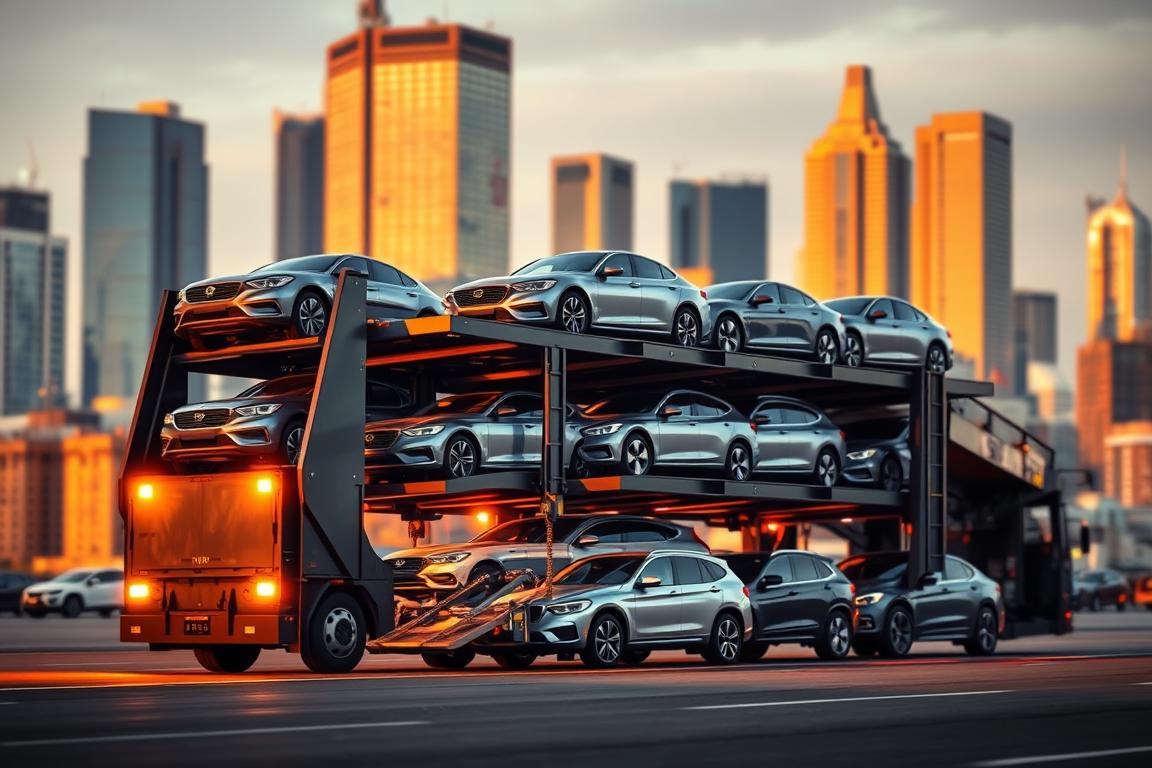
Understanding key equipment—ramps, tie-downs, and liftgates—lets you judge which transport option fits your needs.
A purpose-built rig combines an engineered trailer, rated tie-down systems, and professional procedures to keep your car stable in motion and protected during loading and transit. These elements matter most when you book car shipping across long routes or dense urban areas.
The core components include steel ramps, wheel straps or chains, soft tie-downs in enclosed units, and hydraulic liftgates for low-clearance models. RoadRunner highlights steel ramps and heavy straps on open haulers, while Montway emphasizes padded interiors and liftgates on enclosed options.
Open trailers favor airflow and efficiency for most shipping needs, especially on Los Angeles routes where cost and availability matter. Enclosed setups shield a higher-value vehicle from weather and debris—choose based on value and risk tolerance.
- The driver inspects anchor points and balances load to reduce sway.
- Pickup documentation and photos ensure accountability at handover.
- Consider ramps and deck height when planning time and multi-stop routes.
Open car carrier vehicles for standard car shipping
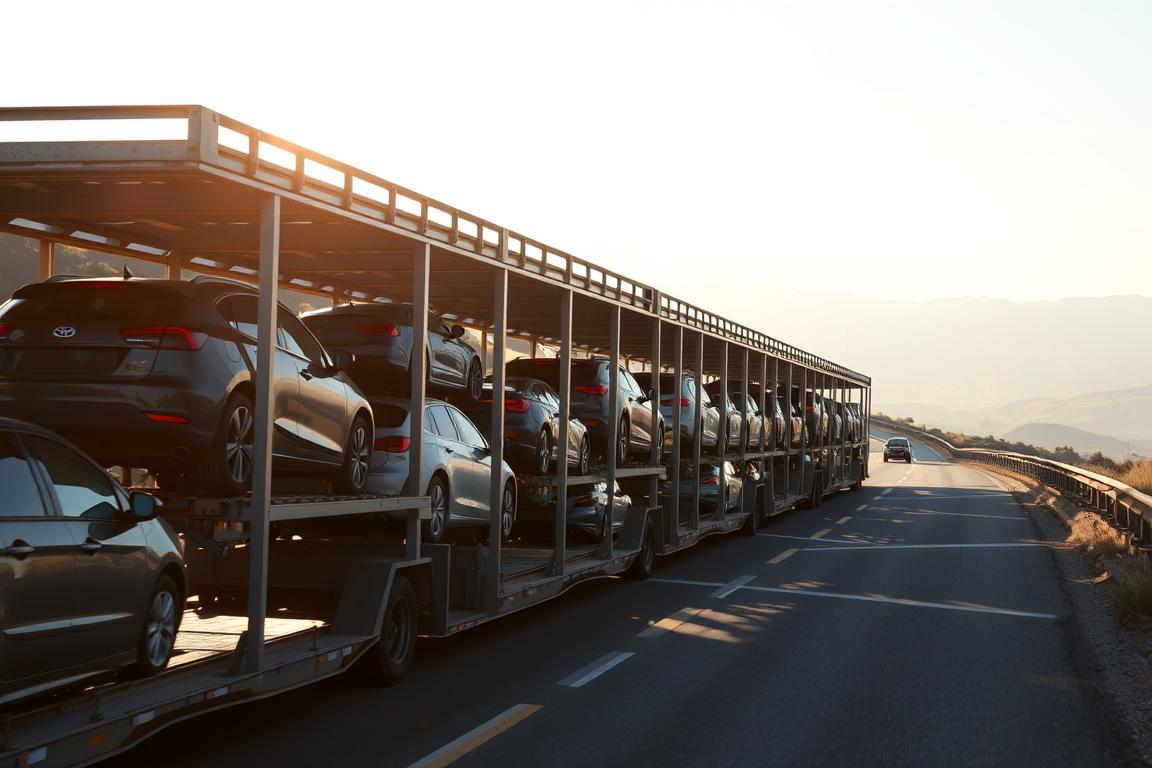
When budget and timing matter most, open trailers are the go-to choice for standard auto transport.
Single-car flatbed carriers work best for same-day local moves in Los Angeles. They fit tight streets and avoid staging delays. Drivers can make quick pickups and complete delivery within hours for short hops.
Multi-car open haulers—including stinger-steer, wedge, and double-deck trailers—carry more units on interstate runs. High capacity keeps per-unit cost down on busy routes like LA-to-coast corridors. Expect steady availability and faster dispatch times compared with enclosed options.
- Affordable pricing in Los Angeles ranges commonly from $500–$1,000 for many routes; LA–NY averages $1,000–$1,230.
- Regional shipping often completes in 1–5 days; coast-to-coast runs usually take 5–10 days depending on traffic and weather.
- Exposure to weather and road dust is the main downside—proper straps, chains, and placement minimize movement and damage risk.
“Drivers perform inspections at pickup and delivery and provide documentation so you can confirm condition quickly.”
| Option | Best use | Typical LA price | Transit time |
|---|---|---|---|
| Single-car flatbed | Same-day local pickups, tight streets | $150–$400 (local) | Same day to 1 day |
| Stinger / wedge trailer | Interstate mixed loads | $500–$1,000 | 1–10 days (route dependent) |
| Double-decker multi-hauler | Dealers, auctions, multi-delivery runs | $500–$1,230 (LA–NY avg) | 5–10 days coast-to-coast |
If you need a quick quote, open options in los angeles often dispatch fastest due to high network density. For classic or exotic owners, weigh savings against the protection of open enclosed alternatives when weather or construction risks rise.
Enclosed car carrier vehicles for high-value and classic cars

When value and condition matter most, enclosed transport is the clear choice for protected moves.
Enclosed units shield prized rides from weather, debris, and prying eyes. They are the preferred option for luxury and restored models moving in and out of Los Angeles.
Hard-side trailers use rigid panels for maximum protection. Soft-side units add flexibility and lighter weight, which helps access on narrow streets.
Liftgate and low-clearance solutions
Hydraulic liftgates and ramps make loading safe for low-clearance exotics and many EVs. Soft tie-downs and padded walls prevent scuffs on delicate finishes.
Security, scheduling, and insurance
Enclosed auto transport often offers tighter scheduling, fewer units per load, and stricter security. Expect higher cost—typical Los Angeles routes run about $1,000–$2,500 depending on distance and time.
| Feature | Best use | Typical LA price |
|---|---|---|
| Hard-side trailer | Concours, collector sets | $1,200–$2,500 |
| Soft-side trailer | Narrow access, lighter loads | $1,000–$1,800 |
| Liftgate + padded interior | Low-clearance exotics & EVs | $1,300–$2,200 |
Tip: Confirm cargo insurance limits and get a written quote before pickup. Enclosed transport gives added peace of mind when preserving condition and value matters most in los angeles auto moves.
Specialized car carriers for unique transport needs
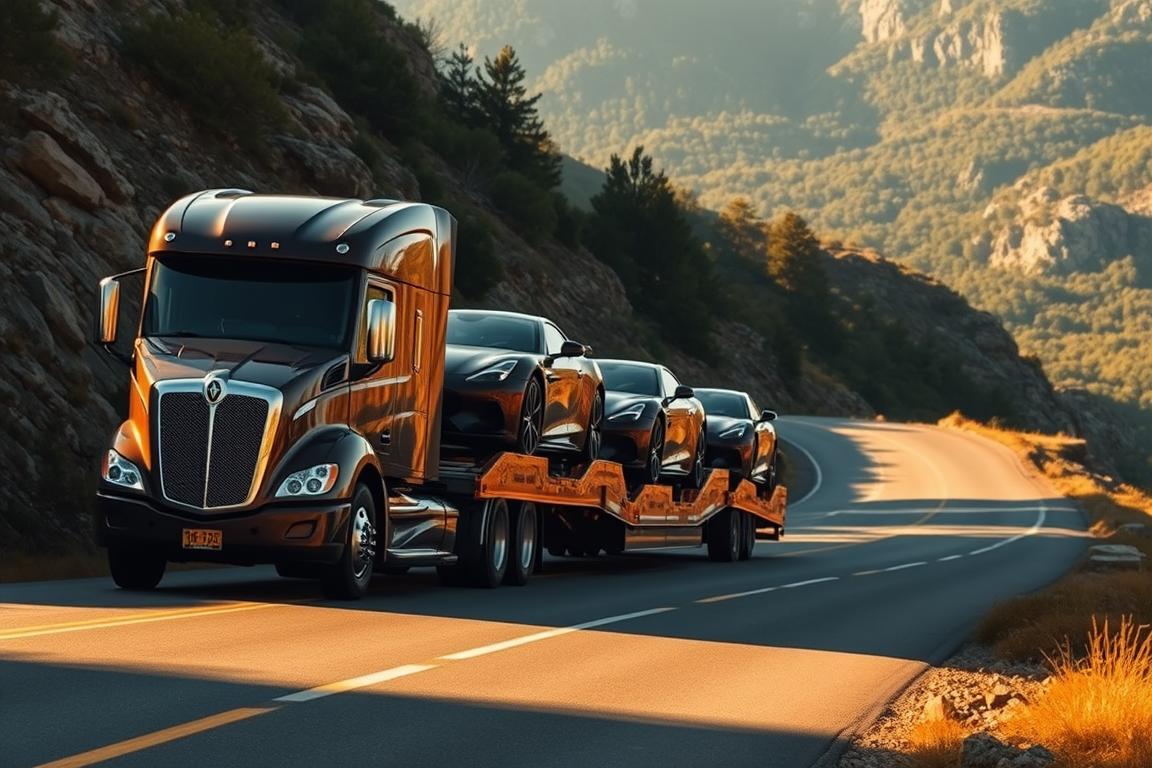
When standard options won’t fit, the right specialty service keeps complex moves calm and predictable.
Inoperable units and winch-equipped rigs
Non-running units need gear and experienced crews. Winches, lifts, and extra manpower make loading safe when an engine won’t turn over.
If you plan to ship a non-running unit, state whether it can roll, steer, or brake. That detail sets the right equipment and avoids surprises in time and cost.
Motorcycle and powersports trailers
Montway and Hilton use soft straps, wheel chocks, and padded tie-downs on bikes, ATVs, and UTVs for Los Angeles routes.
Experienced drivers protect fairings, bar angles, and low-clearance frames. For high-value bikes, consider enclosed crates or added padding.
Expedited and dedicated options
Expedited service trims 1–3 days off typical timelines. Expect a modest premium—often $150–$300 depending on route and availability.
Dedicated runs add privacy and predictability—useful for media moves, shows, or tight closing dates. Pairing inoperable transport with enclosed protection works well for restorations.
- Share photos and specs to match equipment to needs.
- Specialized setups increase labor slightly but reduce risk.
“The right specialized option keeps complex moves calm and controlled from pickup to delivery.”
How each car carrier type works from pickup to delivery
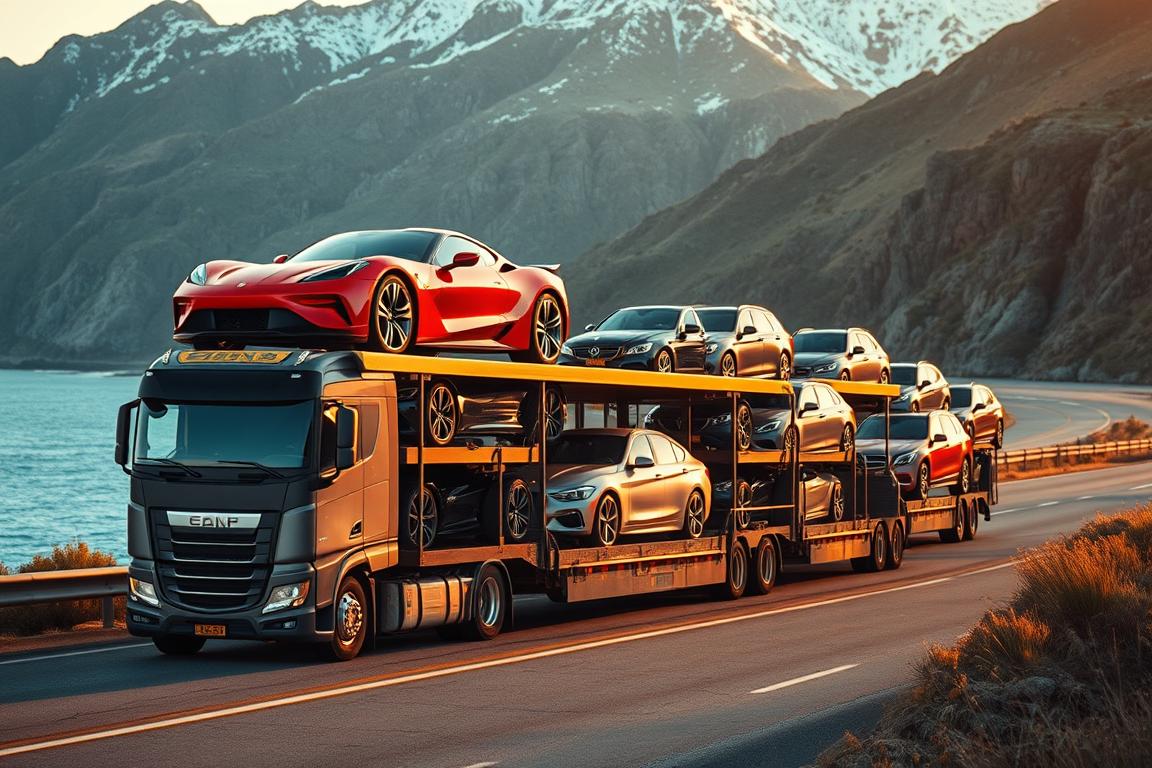
This section walks through the practical steps from pre-pickup prep to final delivery so you know what happens at every stage.
Pre-pickup prep: cleaning, documentation, and disabling alarms
Before pickup, wash and photograph the exterior with time-stamped shots. Remove racks, antennas, and loose accessories.
Empty personal items, disable alarms, check fluids and tire pressure, and leave about a quarter tank of gas. These steps speed pickup and protect your coverage during shipping.
Loading, securing, and route monitoring
At pickup the driver inspects and documents condition, noting existing blemishes and taking photos for both parties.
Open units load with steel ramps and tight wheel straps; enclosed options often use liftgates and soft tie-downs for extra protection.
Technicians position the load for balance and secure it at approved anchor points. Professional route monitoring adapts plans for los angeles traffic, weather, or construction.
Drop-off inspections and paperwork completion
Delivery includes a walk-around with the driver—compare pickup photos and note any differences before signing.
Keep copies of the bill of lading and inspection report. Document problems immediately; prompt reporting helps resolve claims fast.
“Clear photos, open communication, and careful inspections make shipping smooth and reduce surprises at delivery.”
- Typical LA transit: coast-to-coast 5–10 days, regional 1–5 days.
- Expect updates from dispatch through delivery so you always know the route and timing.
Choosing the right car carrier vehicle for your shipment

Choosing the right rig starts with matching what you own to the level of protection and loading it needs.
Match by vehicle type, value, and ground clearance
Start with the profile: daily driver, luxury coupe, classic truck, or EV. High-value and low-clearance units usually benefit from enclosed transport with a liftgate.
Standard sedans and SUVs pair well with open multi-car haulers for cost-effective moves. Single-car flatbeds help with tight access in Los Angeles neighborhoods and gated properties.
Timeline, budget, and route conditions
Balance timing and cost: open options are widely available and often cheaper, while enclosed adds protection and more precise handling.
- Share accurate dimensions and mods so loading angles and strap points fit your load.
- If you need faster delivery, ask about expedited or dedicated runs.
- When moving more than one unit, multi-car open haulers are usually the most economical choice.
“Match protection to value, and plan access around tight streets for a smooth pickup and delivery.”
Tip: I recommend clear photos and honest specs—good info cuts surprises and keeps car shipping and auto transport on schedule.
Cost and time factors: distance, route, seasonality, and trailer type
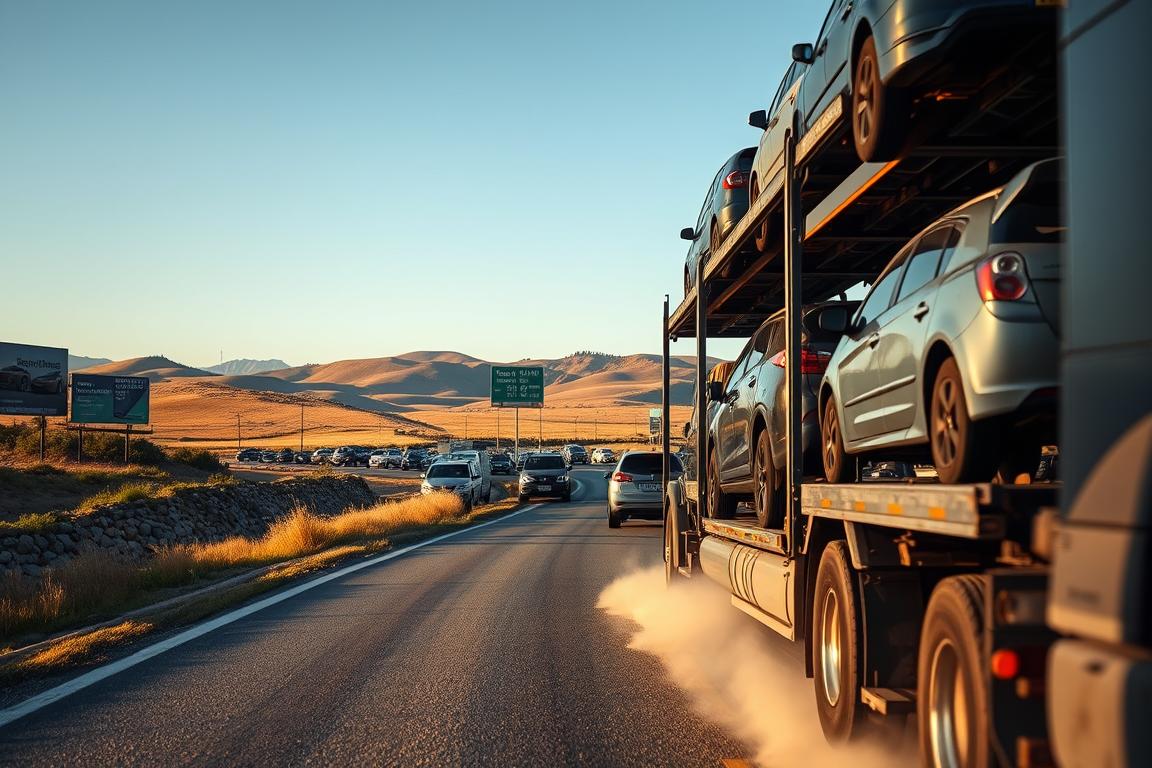
How far your shipment travels and when it moves will shape both price and days in transit.
Distance sets the baseline: longer hauls cost more overall but often lower the price per mile on busy corridors out of los angeles. Popular routes reduce wait time and smooth pickup to delivery windows.
Route congestion — freeway work or peak LA traffic — adds variability to time and cost. Plan a buffer for staging and possible reroutes.
Open vs. enclosed pricing and availability
Open transport is typically the most affordable and easier to book. Enclosed options add a premium for protection and narrower availability.
Expedited service usually trims 1–3 days for about $150–$300 extra — useful for tight closings or events.
Los Angeles examples and typical timelines
LA to New York on open often lands near $1,000–$1,230. Montway-style estimates show LA→TX in ~5–7 days (~$1,289), LA→FL ~7–9 days (~$1,559), and longer LA→NY runs around $1,687 when demand is high.
“Share exact pickup info, dates, and trailer preference to get an accurate instant quote.”
| Route | Typical price (open) | Transit time (days) |
|---|---|---|
| Los Angeles → Texas | $1,200–$1,350 | 5–7 |
| Los Angeles → Florida | $1,400–$1,700 | 7–9 |
| Los Angeles → New York | $1,000–$1,230 | 7–9 (coast-to-coast 5–10) |
Door-to-door convenience and terminal options in major metros
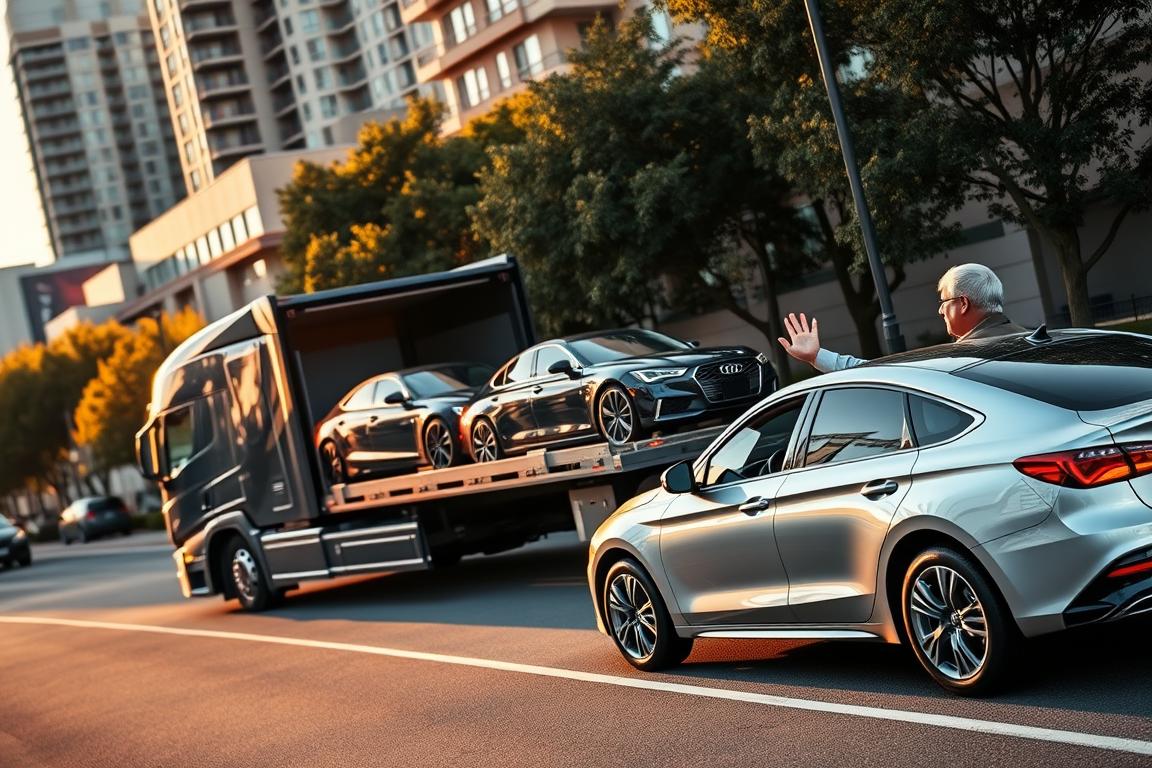
I aim for door-to-door convenience, but practical limits in some Los Angeles neighborhoods mean a short walk to a safe loading spot.
Door service is standard: the driver plans to reach your address for pickup and delivery whenever safe and legal. In dense areas, tight streets or local restrictions may force a nearby meet point instead.
Navigating residential restrictions for large rigs
Expect proactive communication when access is tight. A nearby wide street, shopping center lot, or truck-approved zone often becomes the staging area.
For gated communities or apartments, share gate codes, height clearances, and best staging notes before pickup. That helps the driver finish inspections and paperwork fast.
When terminal shipping can save money
Terminal-to-terminal can lower cost if your schedule is flexible and you can drop off or collect at a secure Los Angeles facility. It’s a smart choice when dates allow and you want a lower quote.
- Door-to-door is fastest and easiest for most families and businesses.
- Terminal shipping reduces cost but adds a short trip for pickup or delivery.
- Single-car flatbeds or alternate meeting spots solve tight-access problems without extra risk.
“We’ll weigh convenience against budget — door service for ease, terminals for savings — and confirm the best plan before booking.”
Insurance, coverage limits, and driver vetting you should expect

Before you commit, confirm both coverage and who will handle your load. That simple check saves time and stress at delivery. I recommend asking for written proof and clear contact points.
Cargo insurance basics and contingent coverage
Always ask for the cargo policy and deductible details before booking. Confirm the limits, exclusions, and the process for filing a claim.
Some companies add contingent coverage. For example, Montway offers contingent cargo protection up to $250,000 beyond the trucker’s policy. Ask similar questions of any company you consider.
- Request a certificate of insurance and policy number.
- Confirm who pays the deductible and typical claim timelines.
- Keep pickup and delivery photos to support any claim.
Background checks, safety records, and tracking updates
Vet the team: look for background checks, active authority, and clean safety stats. RoadRunner and similar firms report careful driver screening and solid records.
Expect modern tracking through apps or portals so you know the location and ETA during long distance shipping from or to Los Angeles. Clear communication with dispatcher and driver keeps delivery predictable.
- Ask for MC/DOT numbers and check public records.
- Verify years in business and complaint history.
- Confirm how inspection reports are stored and shared.
“Proof of coverage and timely tracking turn uncertainty into confidence at every handoff.”
Final tip: don’t be afraid to ask questions—about insurance limits, claim steps, and who you call on pickup. A trustworthy company will share documents, answer plainly, and keep you updated every mile.
Los Angeles routes, neighborhoods, and service coverage
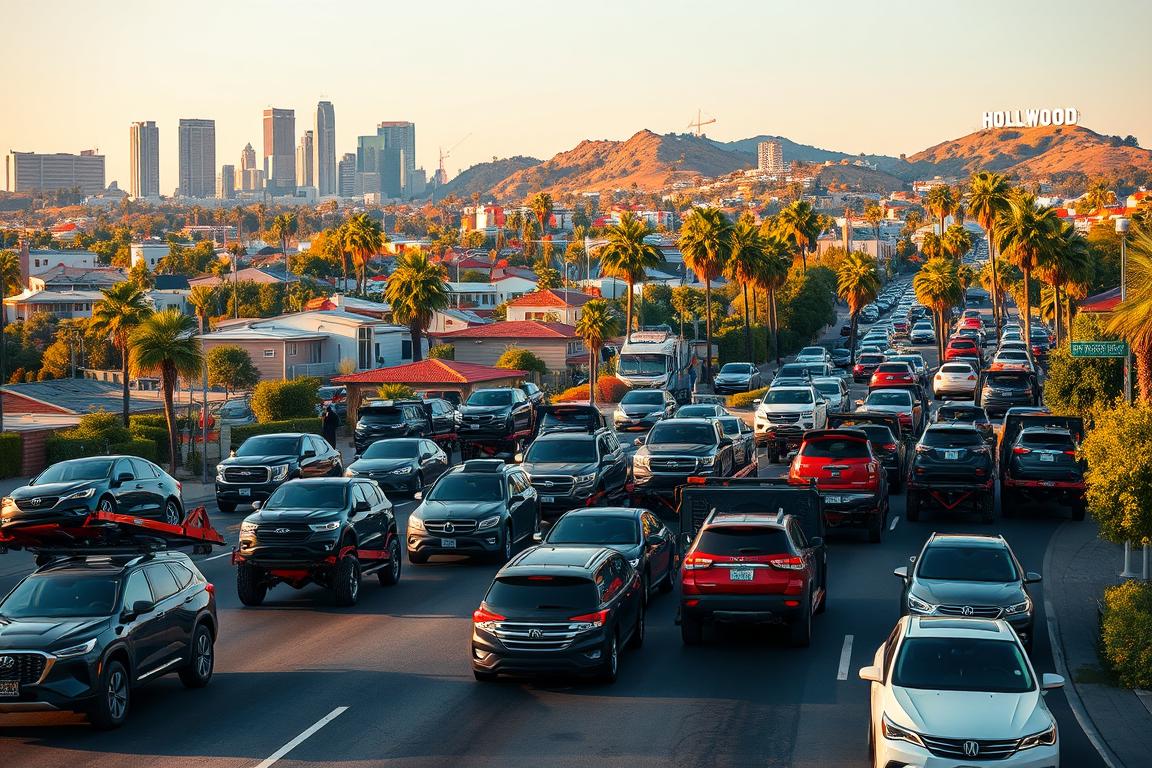
Los Angeles has a mix of tight streets and major freeways, so planning matters for fast, reliable pickups and deliveries.
Popular LA corridors and surrounding cities supported
We cover Los Angeles end-to-end — Downtown, Hollywood, the Westside, the Valley, and South Bay. Our network also serves Long Beach, Anaheim, Glendale, and Pasadena.
Key corridors include I-5, I-10, I-405, US-101, and CA-60. Those routes link local pickups to statewide and national runs fast.
Surrounding hubs such as San Diego, San Bernardino, Riverside, and Bakersfield sit inside our active routing for speedy regional transfers.
ZIP code reach and network capacity for rapid pickups
Extensive ZIP coverage — including 90001 through 90099 and dozens more across LA County — helps us stage trucks near your address.
High network capacity shortens pickup windows, especially for open loads where trucks are plentiful. Share your first available date and flexible time windows.
We coordinate with dispatch to optimize distance, traffic, and local restrictions so your pickup and delivery stay on schedule in most cases.
- We scale for single-unit moves or multi-vehicle transfers across LA lanes.
- Expect clear communication on staging points in tight neighborhoods.
- Get an instant quote with ZIPs to see realistic days and costs for your pickup and delivery.
Instant quote to scheduled pickup: streamlining your order

A quick instant quote that captures pickup, delivery, and model details is the fastest way to lock in timing and cost.
Details needed for accurate pricing and timing
Start with exact addresses, first available date, and trailer choice (open or enclosed). Include trim level, ground clearance, and any modifications so we plan ramps and tie-downs correctly.
List whether the unit runs, key location, and any access limits like gate codes or tight streets. That clarity cuts back-and-forth and yields a better price and ETA.
Tips to secure faster dispatch and better rates
- Be flexible on pickup windows and meet near major routes to speed dispatch.
- Ask about expedited service — it can shave 1–3 days for roughly $150–$300 extra.
- Book earlier in peak season to lock lower prices and better availability.
- If shipping from a dealer or auction, confirm release hours and paperwork in advance.
| Quote input | Impact on price | Quick tip |
|---|---|---|
| Exact pickup/drop ZIPs | Improves ETA and reduces routing fees | Enter full ZIP and building details |
| Trim, clearance, mods | Avoids last-minute gear charges | Provide photos and measurements |
| Preferred dates & trailer type | Locks rate and dispatch window | Choose flexible dates when possible |
Comparing providers: experience, awards, and customer reviews
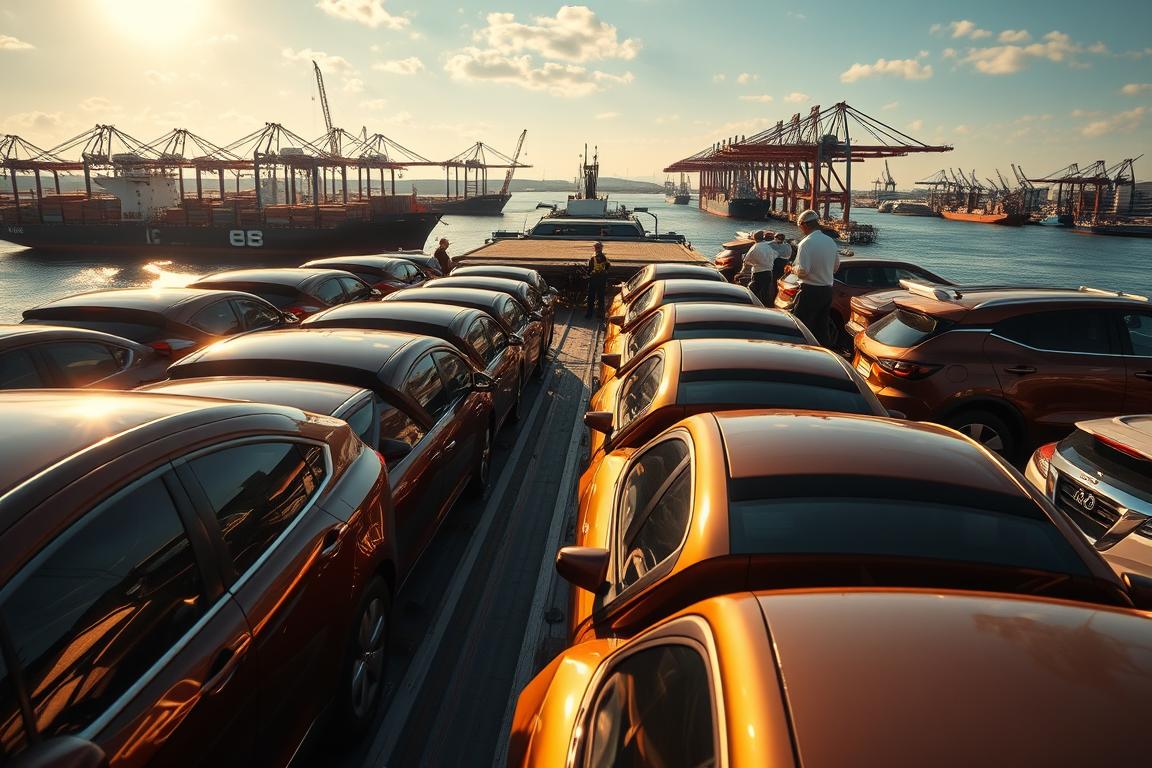
A solid comparison looks at tenure, ratings, insurance depth, and how teams handle tight Los Angeles pickups.
Years in service and safety practices matter. RoadRunner brings 30+ years focused on car shipping. They vet drivers, offer door-to-door service, and provide real-time tracking. That history often means steadier routes and predictable timelines.
Ratings, awards, and industry recognition
Montway posts top scores across Google, BBB, Transport Reviews, and My Moving Reviews. That third-party praise shows consistent customer satisfaction.
Hilton is family-owned since 2004 with Angie’s List Super Service Awards, a BBB A+ rating, and the 2023 Best of Torrance Award. They also offer zero upfront payment and include insurance in quotes — helpful for budgeting.
Real-world feedback on open vs. enclosed moves
Customers often highlight how enclosed runs protect classics and exotics during long Los Angeles trips. Open loads get credit for lower cost and faster network availability.
- Confirm insurance depth — Montway’s contingent coverage up to $250,000 adds a safety net.
- Ask how dispatch handles tight urban access, apartments, and HOA rules.
- Request a detailed quote with timelines and inclusions to avoid surprises.
“Choose the company that pairs proven experience with warm, attentive care — it makes shipping predictable and low stress.”
When to upgrade to enclosed auto transport
When value and finish matter, moving to an enclosed option is usually worth the extra cost.
Enclosed runs shine for luxury, classic, and collector needs. If you own a high-value or rare model, the padded interior and soft tie-downs reduce abrasion and keep finishes pristine during long Los Angeles moves.
Luxury, classic, and collector models
Concours-level builds and restored classics benefit from limited exposure to dust, road grime, and weather. Enclosed car service keeps detail work intact for shows or auctions.
Low-clearance and custom builds needing liftgate loading
Low-clearance vehicles, aero kits, and custom splitters risk scraping on ramps. Liftgate loading and careful placement avoid underbody damage and extra detailing after delivery.
- Upgrade to enclosed when rarity, finish, or resale value matters.
- Padded interiors and soft straps cut abrasion risk for exotics and classics.
- Liftgates protect low-clearance and modified undertrays during loading.
- EVs with sensitive battery enclosures often pair best with enclosed plus liftgate.
Balance cost and goals: enclosed auto transport costs more, but it can save on future detailing and preserve resale. If you’re unsure, I’ll review specs and recommend the safest option that fits your timeline and budget.
“Book early — enclosed availability tightens around major shows and peak seasons in Los Angeles.”
Tip: Confirm insurance limits and any special riders for high-value loads before shipping to ensure full protection.
Conclusion
Here’s a short checklist to help you choose the best option, secure a fair price, and feel confident before booking.
You now know how each carrier type works, what protection each offers, and how to match your car and timeline to the right solution in Los Angeles.
Open loads give speed and value for daily use models. Enclosed service protects luxury, classics, and low-clearance builds when condition matters most.
Plan around distance, season, and LA congestion to set realistic delivery expectations and keep costs in check. Pick a company with vetted drivers, strong insurance, and solid reviews — that protects you from pickup through delivery.
When you’re ready, get an instant quote with addresses, dates, and model details to secure your order. If you have questions, reach out — I’ll walk you through options so customers feel confident every step of the way.
FAQ
What defines a car carrier vehicle and why does the type matter for safe auto transport?
A car carrier vehicle is a trailer or truck built to move passenger automobiles and light trucks. The type matters because design features—like ramps, tie-down systems, liftgates, and deck spacing—affect how securely a unit loads, protects, and travels. Picking the right transporter reduces risk of damage, simplifies loading for low-clearance or inoperable units, and aligns with insurance and route constraints.
What are the core components I should check before shipping?
Inspect the trailer decks, tie-down points, ramps or liftgates, and any winches. Also verify working lights, brakes, and clear visual access for the driver. These parts keep a shipment stable and compliant with state rules during transit.
How do open and enclosed protection levels differ?
Open transport exposes a unit to weather and road debris but is the most economical and widely available. Enclosed transport shelters units on all sides, offering better protection for high-value, classic, or exotic models. Enclosed options cost more but reduce exposure to chips, salt, and moisture.
What types of open carriers are used for standard shipping?
Common open options include single-car flatbeds for local moves and multi-car haulers—such as stinger and wedge setups or double-deck trailers—for longer routes. These maximize load efficiency and availability for routine moves across regions like Los Angeles and nationwide.
When is enclosed transport the right choice?
Choose enclosed shipping for luxury, classic, collector, or freshly detailed cars, and for low-clearance exotics or EVs that need liftgate loading. It’s ideal when weather, theft risk, or road debris pose a real threat to value or finish.
What’s the difference between soft-side and hard-side enclosed trailers?
Soft-side trailers use fabric or vinyl walls and are lighter and more cost-efficient. Hard-side trailers have rigid metal walls, giving stronger security and better climate resistance—preferred for long-haul or high-value moves.
How do specialized carriers handle inoperable units or motorcycles?
Inoperable units are loaded with winches and low-angle ramps or tilt beds to reduce lift stress. Motorcycle and powersports trailers include wheel chocks, dedicated anchor points, and padded straps to protect frames and controls during transit.
What steps happen from pickup to delivery?
Typical steps are pre-pickup prep (cleaning, documentation, disabling alarms), loading and securing with approved tie-downs, route monitoring and updates during transit, then a final drop-off inspection and signed paperwork to confirm condition and delivery time.
How should I prepare my unit before pickup?
Remove personal items, secure loose parts, leave minimal fuel (about a quarter tank), disable alarms, take photos for records, and have title or ID ready. These steps speed pickup and support insurance claims if needed.
How do I choose the right transporter for my shipment?
Match the transporter to your unit’s value, ground clearance, and operating condition. Consider timeline, budget, and route conditions—low-clearance or high-value units often need enclosed carriers or liftgates. Ask about experience on your route and get an instant quote to compare options.
Which factors most affect cost and delivery time?
Distance, route congestion, seasonality, and trailer type drive price and timing. Open loads are cheaper and quicker to book. Enclosed transport costs more and can have longer waits, especially in peak seasons or for specialized lanes like coast-to-coast from Los Angeles.
Are there door-to-door and terminal shipping options?
Yes. Door-to-door offers maximum convenience but may face residential access restrictions for large transporters. Terminal-to-terminal can be cheaper and better for tight neighborhoods or when you can drop off and pick up at a secure yard.
What insurance and vetting should I expect from a reputable company?
Expect cargo insurance that covers damage in transit and contingent coverage when a carrier’s liability is limited. A trustworthy provider shares proof of insurance, driver background checks, USDOT or MC numbers, safety records, and tracking updates throughout the route.
How do Los Angeles routes and neighborhoods affect pickup scheduling?
LA has busy corridors and parking restrictions that influence pickup windows and carrier access. Urban cores may require earlier pickups, off-peak scheduling, or terminal drop-offs. Ask a provider about ZIP-code reach and network capacity for faster pickups.
What details are needed for an accurate instant quote?
Provide vehicle make and model, operating condition, pickup and delivery ZIP codes, preferred transport type (open or enclosed), and desired pickup window. More specifics—like low clearance or inoperable status—help secure the right trailer and an accurate price.
How can I secure faster dispatch and better rates?
Be flexible on pickup/drop-off dates, opt for terminal shipping if possible, and book earlier outside peak seasons. Compare providers by experience, reviews, and industry credentials to balance cost with reliability.
What should I look for when comparing transport companies?
Check years in service, BBB ratings, customer reviews, and any industry awards. Look for transparency on pricing, insurance, and route tracking. Real-world feedback on enclosed and open shipments reveals how companies handle claims, timing, and customer care.
When is upgrading to enclosed transport essential?
Upgrade when moving luxury, classic, or collector models, low-clearance or custom builds, or any unit that can’t tolerate road debris or harsh weather. Enclosed units reduce risk and give extra peace of mind during long hauls.