
If you’re planning New York to Pennsylvania car shipping for the first time, expect most moves to take about 1–3 days once the car is picked up, and price to depend mainly on distance, vehicle type, and timing. In plain terms: it’s like booking a flight—the same route can cost more on busy weeks or with “premium” options like enclosed transport.
For example, a sedan on open transport is usually cheaper than an SUV (more space/weight), and choosing a wider pickup window (2–5 days) often lowers the quote compared to “ASAP pickup.” The good news is that most problems come from a handful of predictable mistakes—so once you know what to look for, moving vehicle from NY to PA becomes straightforward.
This guide breaks down the 10 biggest first-timer mistakes and shows you how to avoid them, so your NY → PA shipment is smooth, documented, and dispute-free.
Need New York to Pennsylvania car shipping?
Even on shorter routes, it’s smart to understand the basics in how to transport a vehicle to another state so you know how pickup windows and delivery timing work.
For related Northeast and long-haul routes, explore:
Summary
Table of Contents
How car shipping really works (moving vehicle from NY to PA)
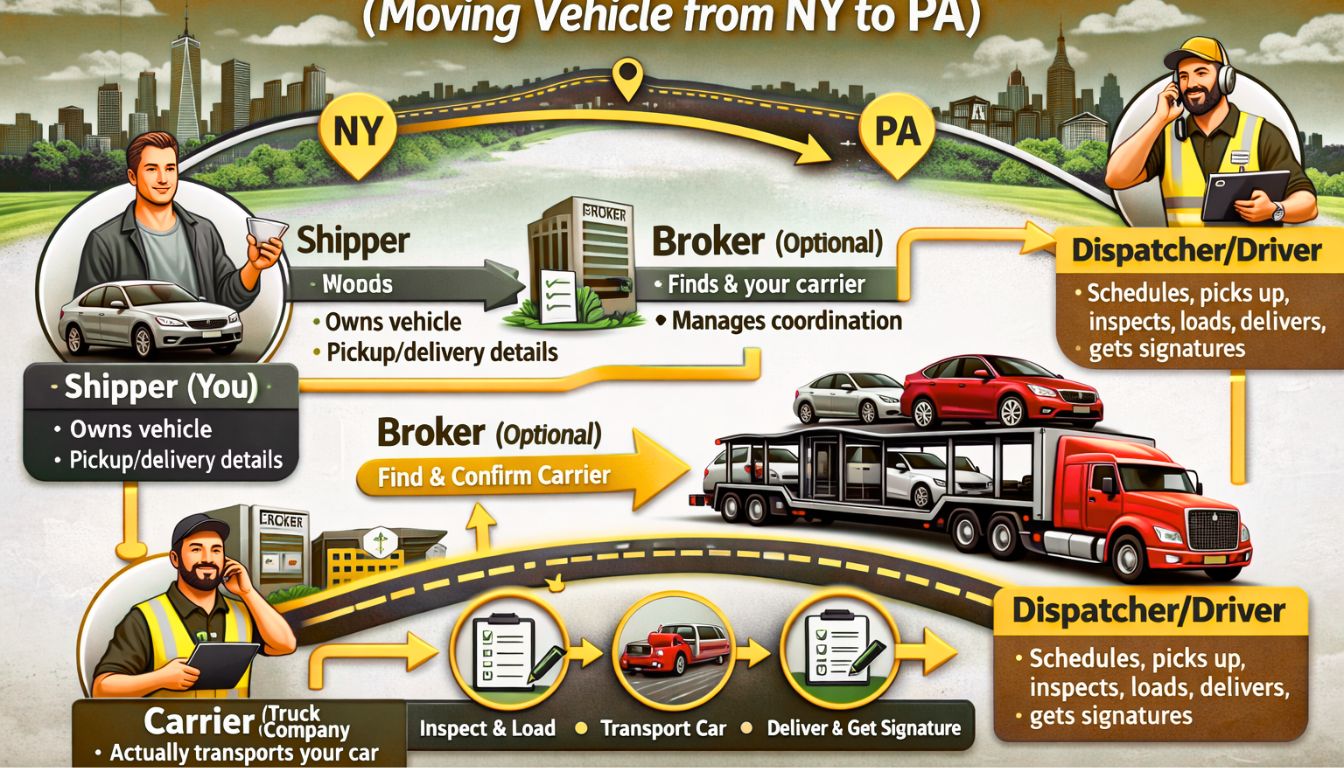
There are a few key players:
- Shipper (you): owns the vehicle and provides pickup/delivery details.
- Broker (optional): finds a carrier for your lane and manages coordination.
- Carrier (the truck company): actually transports your car.
- Dispatcher/Driver: schedules, picks up, inspects, loads, delivers, and gets signatures.
Your choices (open vs enclosed, door-to-door vs terminal, timing flexibility) affect price, speed, and risk.
10 mistakes first-timers make (and how to avoid each one)
1) Choosing the cheapest quote without verifying who’s behind it
A low price can be legit, but it can also mean fake listings, weak communication, or a carrier with poor insurance/claims practices.
Avoid it: Ask for the company’s MC/DOT, confirm they’re active, and make sure the name on the quote matches the name on the insurance certificate.
2) Not understanding broker vs carrier
Many first-timers think they hired “the truck,” but they actually hired a broker who will later assign a carrier.
Avoid it: Ask directly:
- “Are you the carrier transporting the vehicle, or a broker arranging it?”
- “Who will hold the cargo insurance: the carrier you assign?”
3) Assuming “door-to-door” means a semi will enter any street
NYC, Long Island, and tight neighborhoods often have truck restrictions, low trees/wires, narrow turns, and nowhere legal to stop.
Avoid it: Be flexible with a nearby meeting point (shopping center lot, wide side street, safe commercial area). This often prevents delays and last-minute reschedules.
4) Giving vague pickup/delivery windows
Car shipping is routed logistics, not Uber. A too-tight window can create extra fees, missed pickups, or rushed inspections.
Avoid it: Provide a realistic window (even 1–3 days helps). If you must ship on specific dates, say so upfront and confirm it in writing.
5) Skipping proper vehicle prep (then blaming the carrier for avoidable issues)
Dead batteries, low tires, alarms going off, or a car packed with personal items are common problems.
Avoid it (quick prep list):
- Remove personal items (most carriers won’t cover them)
- Leave about 1/8–1/4 tank of fuel
- Disable alarms if possible
- Ensure battery holds charge and tires are inflated
- Have keys/key fob ready
Comparing your New York to Pennsylvania quote?
Use regional pricing from Michigan to Pennsylvania , Midwest–Northeast demand in New York to Michigan , and longer East Coast lanes like New York to Florida as benchmarks.
6) Not documenting the car’s condition before pickup
If there’s a dispute later, the winning side is usually the one with clear photos and consistent paperwork.
Avoid it: Take well-lit photos of:
- All 4 sides + roof + wheels
- Close-ups of existing scratches/dents
- The odometer (optional, but helpful)
7) Treating the Bill of Lading (BOL) like “just a signature”
The BOL is the most important document in auto transport. It’s your receipt and condition record.
Avoid it: At pickup and delivery:
- Walk around the car with the driver
- Make sure any pre-existing damage is noted
- Don’t rush the signature if something looks wrong
8) Not confirming insurance details before booking
First-timers often assume “it’s insured” without knowing limits, exclusions, or deductibles.
Avoid it: Ask:
- “What is the cargo insurance limit per vehicle?”
- “Is there a deductible?”
- “What’s excluded (pre-existing damage, mechanical issues, personal items)?”
9) Forgetting that “operable vs inoperable” changes everything
If the car doesn’t start, steer, brake, or roll normally, it may require a winch, special loading, or different equipment—and cost more.
Avoid it: Be honest about condition. “Mostly runs” can still be “inoperable” in transport terms. Confirm the carrier can handle it.
10) Poor communication: too many contacts, no written confirmations
When everyone is texting everyone, details get lost: addresses, gate codes, auction releases, timing.
Avoid it: Keep a clean chain:
- One primary contact on your side
- One primary point of contact (broker or carrier)
- Confirm the essentials in writing: addresses, windows, payment terms, and who calls who
NY → PA shipping tips that save time
- Metro areas (NYC/Philadelphia): Plan for meeting points and delays.
- Winter months: Weather can shift ETAs—build buffer time.
- Dealerships/auctions: Confirm release rules and hours ahead of time.
Quick checklist you can copy/paste
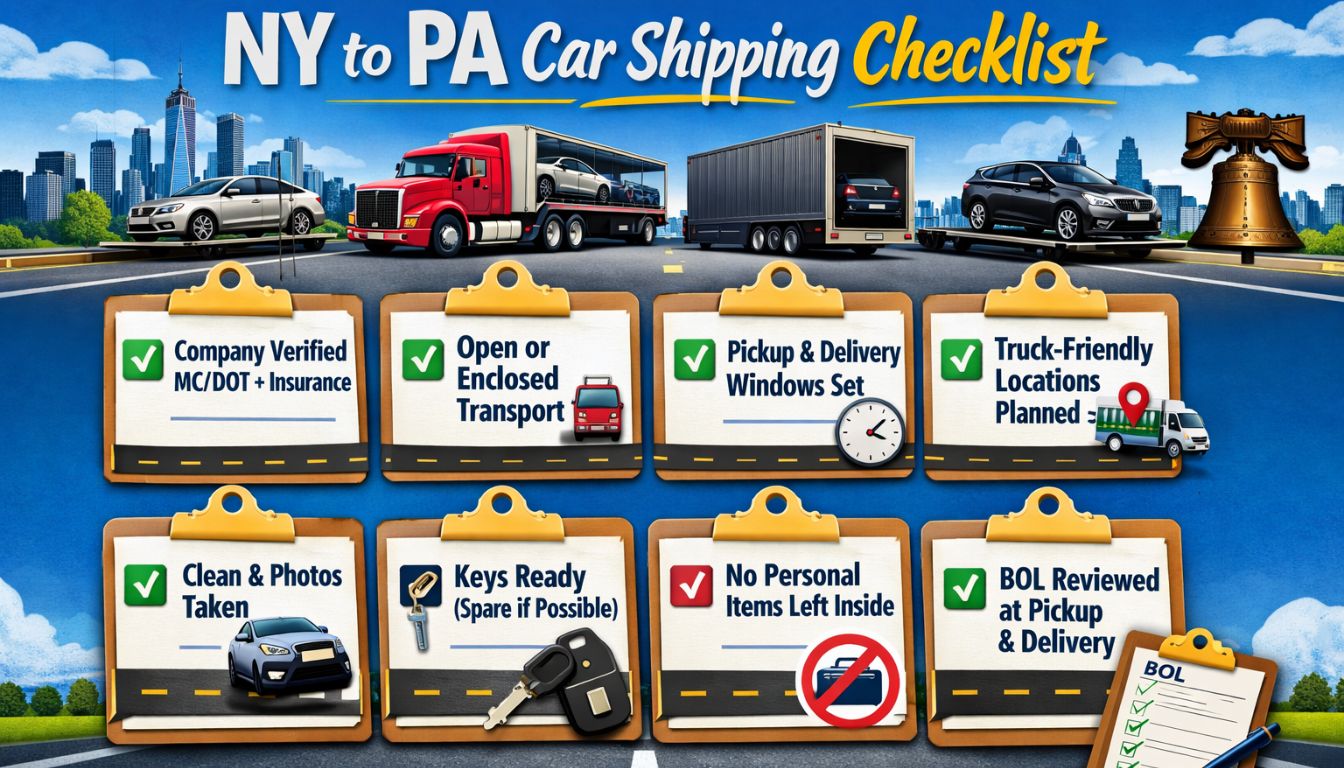
- Company verified (MC/DOT + insurance matches company name)
- Service chosen (open/enclosed, door/terminal)
- Pickup/delivery windows realistic + buffer time
- Locations are truck-friendly (or meeting point planned)
- Vehicle cleaned + photos taken before pickup
- Keys ready (spare if possible)
- Personal items removed
- BOL reviewed at pickup and delivery
Estimated cost & timeline (NY → PA)
These vary by exact cities, season, vehicle type, and flexibility, but here’s a practical reference.
| Factor | Usually lowers cost | Usually raises cost |
|---|---|---|
| Trailer type | Open transport | Enclosed transport |
| Timing | Flexible pickup window | Exact date / urgent pickup |
| Locations | Easy truck access | Tight streets / meeting point delays |
| Vehicle | Standard sedan, operable | Large SUV/truck, inoperable |
| Season | Off-peak weeks | Winter storms / peak demand |
| Typical lane type | Common transit range | Notes |
|---|---|---|
| Upstate NY → PA | 1–3 days | Often smoother access and routing |
| NYC/Long Island → PA | 2–5 days | Meeting points and congestion matter |
| NY → Philly metro | 2–5 days | Traffic and truck access can add time |
Final tip: make it easy for the driver, and you’ll get a smoother shipment
Most “bad shipping stories” start with unclear access, rushed inspections, missing photos, or assumptions about dates. If you verify the company, prep the car, document everything, and keep communication tight, your first shipment is usually stress-free.
If you want a straightforward quote and help picking the right service for your NY → PA route, start here: https://john316transport.com/ or https://j316transport.com/
Final review for New York to Pennsylvania car shipping
Revisit how to transport a vehicle to another state , then confirm your quote looks reasonable compared to:
Frequently Asked Questions About New York to Pennsylvania Car Shipping
-
Is New York to Pennsylvania car shipping expensive?
It can be affordable on open transport, especially with flexible dates. Enclosed, urgent pickup, or big vehicles typically cost more.
-
How long does NY to PA car shipping take?
Short lanes can move quickly, but schedules depend on routing, traffic, weather, and pickup/delivery access. A buffer window helps.
-
Do I need to be present at pickup and delivery?
Not necessarily. You can assign a trusted person, but they must inspect the car, sign the BOL, and have the keys.
-
Should I choose open or enclosed?
Open is the best value for daily drivers. Enclosed is recommended for classics, high-value cars, or anything you want maximum protection for.
Useful Links:
511PA traffic and road conditions (Pennsylvania road updates) — https://www.511pa.com/
FMCSA SAFER Company Snapshot (verify carrier profile) — https://safer.fmcsa.dot.gov/CompanySnapshot.aspx
FMCSA Licensing & Insurance (check authority + insurance listing) — https://li-public.fmcsa.dot.gov/LIVIEW/pkg_carrquery.prc_carrlist
FMCSA: How to File a Complaint (if something goes wrong) — https://www.fmcsa.dot.gov/consumer-protection/how-file-complaint
511NY traffic and road conditions (New York road updates) — https://511ny.org/